



If you are a homeowner in Albany, Schenectady, or anywhere across the Capital Region, knowing the signs your gutters need professional attention could save you thousands in preventable water damage. Gutters fail quietly. By the time you notice a problem from the ground, the damage is often already spreading behind your fascia, under your siding, or into your foundation.
This article walks you through the seven most important warning signs, the mistakes homeowners make when they ignore them, and the practical steps you can take right now to protect your home before the next storm rolls through.
Key Takeaways
- Clogged gutters that overflow repeatedly are not just a cleaning issue.
- They may signal a slope or pitch problem that only a professional can diagnose.
- Most gutter problems are visible from the ground.
- You do not need to climb a ladder to spot the warning signs.
Why Signs Your Gutters Need Professional Attention Matters Now
What Has Changed Recently
The Capital Region experiences a demanding seasonal cycle. Spring snowmelt, summer thunderstorms, fall leaf accumulation, and winter ice loading all stress your gutter system differently throughout the year. What worked when your gutters were installed 5 to 10 years ago may no longer be adequate as the system ages and weather patterns shift.
According to the Insurance Institute for Business and Home Safety, water intrusion from failed gutters is one of the most common causes of preventable home damage in the Northeast. Acting on early warning signs is significantly cheaper than repairing structural damage after the fact.
What Readers Need to Understand First
Gutters are not a passive system. They move water actively away from your foundation, siding, and landscaping. When one component fails, the entire drainage path is compromised.
Many homeowners treat gutters as maintenance-free, which is the root cause of most gutter-related home damage. Understanding what to look for, before a problem becomes critical, is what separates homeowners who spend a few hundred dollars on a repair from those facing multi-thousand-dollar foundation or fascia restoration projects.
Common Signs Your Gutters Need Professional Attention: Mistakes to Avoid
Mistake 1: Ignoring Sagging Sections
Sagging gutters are one of the most visible signs your gutters need professional repair. When a gutter section pulls away from the fascia or visibly dips in the middle, it has lost its proper slope. Water pools instead of flowing toward the downspout, and the added weight accelerates further separation.
Homeowners often assume sagging is cosmetic. It is not. A sagging section can pull mounting hardware out of rotting fascia boards, making the eventual repair much more extensive.
If you see any section that no longer runs in a straight line from your roofline to the downspout, schedule an inspection promptly.
Mistake 2: Dismissing Small Cracks and Holes
A hairline crack in an aluminum gutter looks minor. In practice, water forces its way through even small openings under heavy rain, soaking the fascia and soffit behind the gutter. Over a single season, that moisture creates the conditions for wood rot, mold, and pest entry.
Many homeowners apply DIY sealant as a quick fix. Sealant can work on very small gaps if the underlying gutter is still structurally sound. But if cracking is widespread or the material has become brittle with age, gutter replacement is often the more cost-effective long-term solution.
You can review the decision criteria in this guide on when to repair, clean, add guards, or replace seamless gutters.
How to Fix Each Mistake Quickly
| Warning Sign | DIY Viable? | Professional Action Needed |
|---|---|---|
| Sagging gutter section | Rarely | Rehang, reslope, or replace fascia |
| Visible cracks or holes | Minor gaps only | Seal, patch, or full section replacement |
| Water stains on fascia | No | Inspect for rot and reseal attachment points |
| Overflowing during rain | Sometimes (cleaning) | Check slope and downspout sizing |
| Gutters pulling from roofline | No | Replace fascia board and rehang gutters |
| Peeling paint or rust streaks | No | Sand, treat, and evaluate full replacement |
| Standing water or pooling near foundation | No | Full drainage assessment and regrade |
For homes in Albany, Saratoga Springs, Clifton Park, and surrounding communities, the freeze-thaw cycle makes every one of these issues more urgent. Water trapped in a damaged gutter freezes and expands, turning a small crack into a complete section failure over a single winter.
Practical Signs Your Gutters Need Professional Improvements
Audit Your Current Approach
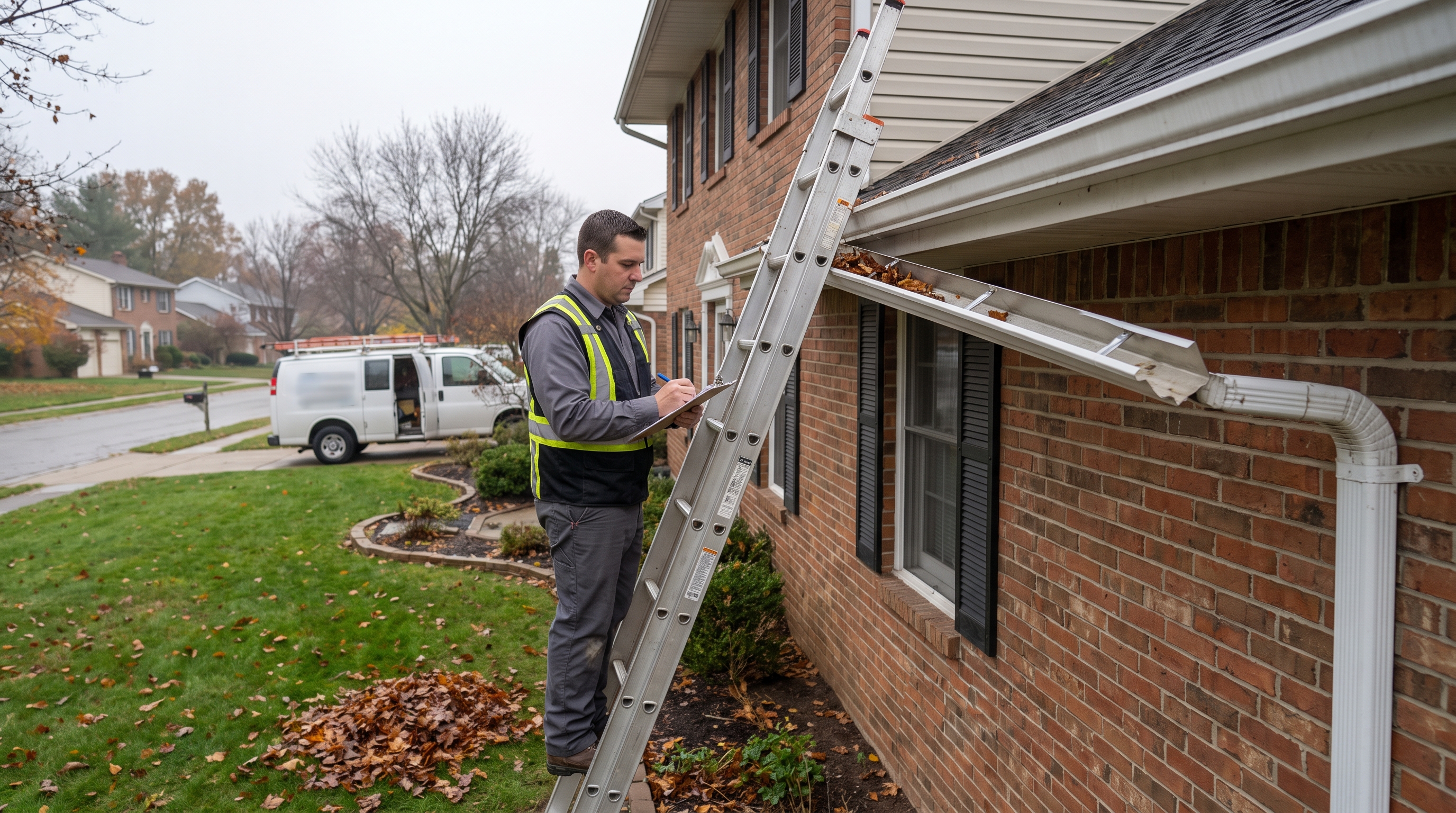
Start with a ground-level walkthrough of your home’s perimeter during or immediately after a rainstorm. This is when problems reveal themselves most clearly. Look for:
- Water spilling over the front edge of the gutter (overflow)
- Water dripping behind the gutter where it meets the fascia
- Any visible separation between the gutter and the roofline
- Rust-colored streaks running down your siding or foundation
- Wet or discolored patches on the soffit visible from below
If you see two or more of these during a single inspection, those are clear signs your gutters need professional evaluation. A professional inspection from a qualified gutter repair technician takes the guesswork out of what is cosmetic versus what is structurally urgent.
Implement the Highest-Impact Fixes
Once you know what you are dealing with, prioritize repairs by risk level. Sagging gutters and fascia damage carry the highest risk because they affect structural integrity. Cracks and leaks are next because they compound with time.
Overflow issues from clogging are the most manageable but still need prompt attention to prevent long-term soil erosion and foundation saturation. For homeowners who want to reduce future maintenance, adding gutter guards after a repair is a smart investment. Micromesh gutter guards in particular reduce the frequency of cleaning and the debris load that causes sagging.
Track and Refine Over Time
After repairs are complete, check your gutters at least twice per year: once in late spring after pollen and seed season, and once in late fall after the leaves drop. In the Capital Region, a post-winter check in March or April is also worthwhile to catch any damage from ice dams or heavy snow loading. Keep a simple photo log of your gutters from the ground.
Year-over-year comparisons make it easy to spot gradual deterioration before it becomes urgent.
Tools, Examples, and Proof Points
Recommended Tools or Workflows
You do not need specialized tools to spot the early signs your gutters need professional repair. A pair of binoculars and a smartphone camera are enough for a thorough ground-level inspection. During rain, simply stand at each corner of your home and watch how water moves.
For anything beyond a visual check, contact a professional. Climbing a ladder to inspect gutters yourself introduces fall risk without delivering better diagnostic results than a trained technician can provide from a stable position with the right equipment.
Real-World Examples
A homeowner in Clifton Park noticed water pooling near their foundation every spring but assumed it was seasonal drainage. After two seasons, a professional inspection revealed that all four downspouts had incorrect slope angles, directing water toward the foundation instead of away from it. The repair cost a fraction of what a foundation waterproofing contractor would have charged.
In Schenectady, a homeowner who saw peeling paint on their siding assumed it was a paint quality issue. The actual cause was a cracked gutter section running water behind the cladding for two full seasons. Early rain gutter repair at the source would have cost far less than the combined siding and interior wall repair that followed.
Comparison and Decision Guide
When to Choose Each Approach
| Situation | Best Approach | Typical Timeframe |
|---|---|---|
| Single cracked section, otherwise sound | Spot repair | Same day or next visit |
| Multiple sagging sections, aging system | Full replacement | 1-2 days |
| Overflow during moderate rain | Clean gutters, check slope | Within 1-2 weeks |
| Fascia damage behind gutters | Repair fascia, rehang gutters | Depends on rot extent |
| New construction or full reroof | New seamless installation | Scheduled with roofwork |
| Post-repair maintenance | Add gutter guards | After repairs complete |
For a deeper look at installation costs and what affects pricing, see the average cost of gutter installation as a reference point when evaluating repair versus replace decisions.
Cost, Effort, and Timeline Tradeoffs
Addressing gutter problems at the first sign of damage typically costs 60-80% less than repairing the downstream water damage those gutters cause when left unattended.
Minor repairs like rehanging a sagging section or sealing a joint are relatively affordable and fast. Full replacements take longer but deliver a reset on the system’s lifespan, especially when paired with seamless gutters that eliminate the joints where most leaks originate. The effort tradeoff is also important to consider.
A homeowner who schedules annual gutter cleaning services and a professional inspection every two years will almost always catch problems in the repair stage rather than the replace stage.
Conclusion and Next Steps
Key Takeaways
- Sagging gutters, visible cracks, fascia staining, and water pooling near your foundation are the most urgent signs your gutters need professional repair.
- DIY fixes only make sense for the smallest, most isolated problems. Anything structural requires professional assessment.
- Waiting costs more. Every season you delay a known gutter problem increases the likelihood of fascia rot, foundation saturation, or interior moisture damage.
- Pairing a repair with gutter guards reduces future maintenance and extends the life of your new or repaired system.
What to Do Next
Walk your home’s perimeter this week and apply the inspection checklist above. If you spot any of the warning signs described here, do not wait for the next rainstorm to confirm the damage. Early action is always less expensive than late action.
For homeowners across Albany, Schenectady, Clifton Park, Saratoga Springs, and the surrounding Capital Region, contact Urban Seamless Gutters for a professional assessment and free estimate. The inspection takes less time than the damage it prevents.
Frequently Asked Questions
How do I know if my gutters need repair or full replacement?
If damage is limited to one or two sections and the rest of the system is structurally sound, repair is usually the right call. If you have widespread sagging, multiple cracked sections, or gutters that are more than 15-20 years old, replacement often delivers better long-term value. A professional inspection will give you a clear answer based on your specific system.
What are the most visible signs your gutters need professional attention?
The most obvious signs include gutters that visibly sag or pull away from the fascia, water stains or peeling paint on yoursiding, overflow during rain, and rust or mildew streaks running down your exterior walls. Water pooling near your foundation after a storm is also a strong indicator that your drainage system is not functioning correctly.
Can I repair gutters myself to save money?
Small jobs like clearing a blockage or resealing a single joint are reasonable DIY tasks if you are comfortable working at height and the gutter is otherwise in good shape. Anything involving fascia damage, slope correction, or section replacement is better left to a professional. The risk of an improper repair is that it masks the underlying problem while the damage continues behind the scenes.
How often should gutters be professionally inspected?
Most gutter professionals recommend an inspection once every one to two years, in addition to cleaning gutters at least twice per year. In the Capital Region, the combination of heavy leaf fall in autumn and ice loading in winter makes an annual inspection a practical minimum. Homes surrounded by mature trees may benefit from more frequent attention.
What happens if I ignore the signs and do nothing?
Ignoring the signs your gutters need professional repair typically leads to a progression of damage. First, water overflows and saturates the soil near your foundation. Over time, that moisture works into the basement or crawl space.
Meanwhile, water running behind the gutter soaks the fascia board, leading to rot, mold, and eventually soffit and siding damage. What starts as a $150-$400 repair can become a $2,000-$8,000 restoration project if left unaddressed across multiple seasons.
Are gutter guards worth adding after a repair?
In most cases, yes. Once your gutters are repaired or replaced, adding micromesh gutter guards significantly reduces the debris load that causes future sagging and clogging. They are particularly effective in areas with heavy tree coverage, which describes a large portion of neighborhoods across Albany, Saratoga Springs, and Clifton Park.
Guards do not eliminate the need for occasional cleaning, but they extend the intervals considerably and reduce the strain on your gutter system between service visits.