



Key Takeaways
- The Capital Region receives approximately 40 inches of annual rainfall, with peak storm intensities that demand properly sized drainage.
- Undersized downspouts are a leading cause of foundation flooding, fascia rot, and soil erosion around Albany-area homes.
- Downspout diameter should be calculated based on your roof’s drainage area, local rainfall intensity, and gutter pitch.
- Aluminum is the most practical material for Capital Region climates: lightweight, corrosion-resistant, and affordable.
- Professional installation ensures correct outlet spacing, extension routing, and code compliance from the start.
Why Gutter Downspout Sizing Matters in High-Rainfall Areas
A properly sized gutter downspout system directs rainwater away from your foundation, fascia, and landscaping before any of those surfaces absorb enough moisture to cause lasting damage.
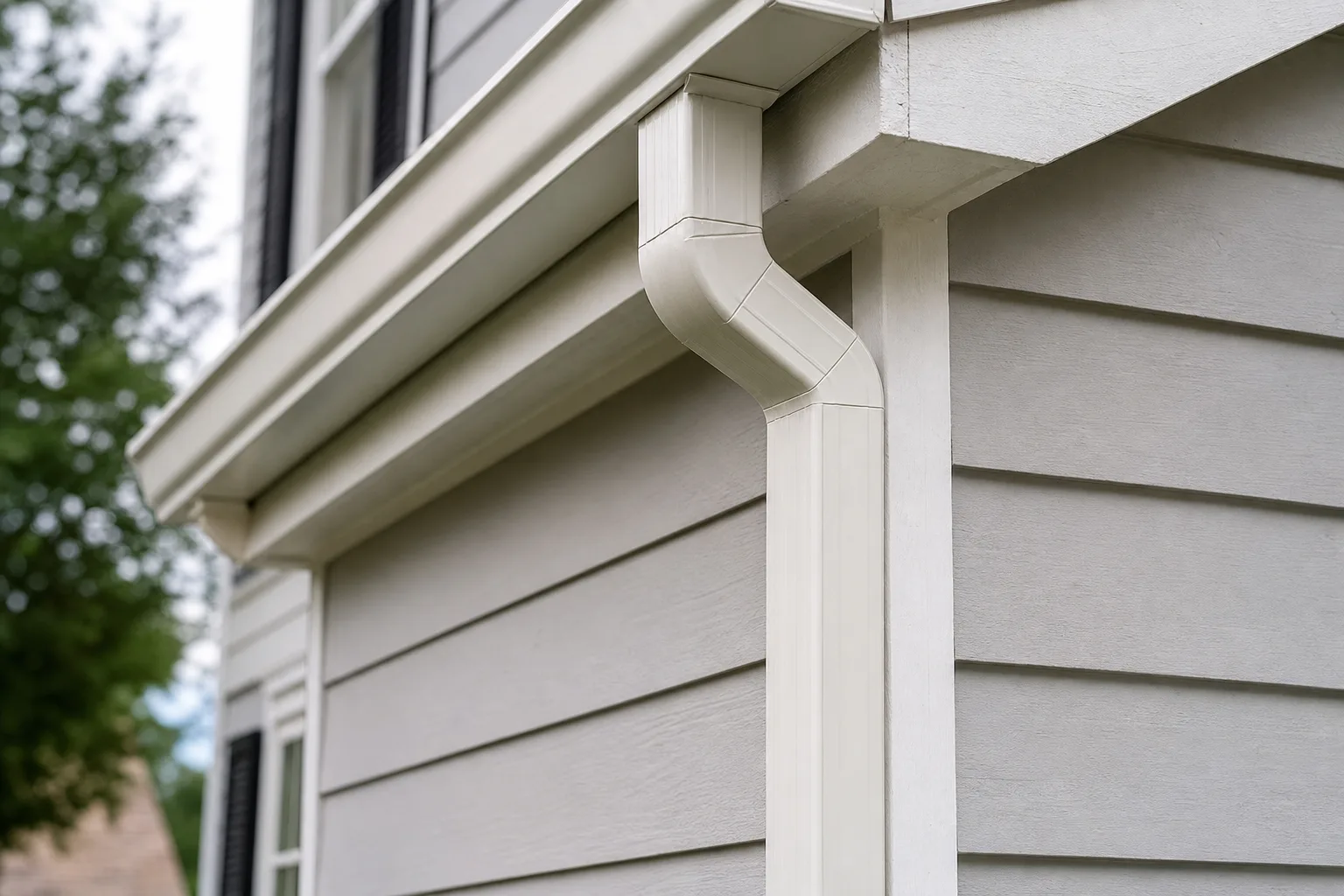
How Capital Region rainfall patterns affect gutter performance
Albany sits in a climate zone where precipitation is fairly evenly distributed across all four seasons. That consistency sounds manageable until a single July thunderstorm drops 2 inches in under an hour. Those short, high-intensity events are what expose undersized gutter systems.
When a 5-inch seamless gutter fills faster than the downspout can drain it, water spills over the front edge and runs straight down your siding and foundation wall.
The Capital Region also deals with freeze-thaw cycles that put extra stress on downspout connections. Ice dams can back up into gutters and push water under roofing underlayment if drainage is restricted at the outlet.
Undersized downspouts and common water damage risks
The consequences of undersized or improperly spaced downspouts show up gradually and then all at once. Common results include:
- Fascia board rot from constant water contact at the gutter back edge
- Foundation seepage when redirected overflow saturates soil against the wall
- Basement flooding in homes with older drainage grades
- Erosion channels cut into landscaping along the drip line
- Mold growth inside walls where moisture infiltrates repeatedly
You can read more about recognizing when your system is failing in this guide to when to repair, clean, add guards, or replace seamless gutters.
Code compliance and insurance implications
Some municipalities in Albany and Schenectady counties reference the International Plumbing Code or local amendments when it comes to gutter drainage requirements. Homes that have experienced repeated flood claims may also face questions from insurance adjusters about whether gutters and downspouts are correctly sized for the structure. Getting your system installed to proper standards from the start protects both your home and your coverage.
Capital Region Precipitation Data and Design Standards
Annual rainfall, peak intensity, and 100-year storm benchmarks
Albany receives an average of about 40 inches of precipitation per year, which includes both rain and snow-equivalent. From a gutter design perspective, the number that matters most is rainfall intensity: how many inches per hour fall during the most demanding storm events your system will ever face.
Drainage engineers use the 100-year storm benchmark, a statistical standard representing the peak hourly rainfall intensity that has a 1-in-100 chance of occurring in any given year. For the Albany area, this figure typically falls in the range of 2.5 to 3 inches per hour for a one-hour duration storm. The SMACNA Downspout and Gutter Sizing Calculator uses regional rainfall intensity data to help size gutter and downspout systems to engineering standards, which is a useful reference when planning a new installation.
Local building codes and gutter drainage requirements
New York State’s building and residential codes require that roof drainage systems be designed to handle peak flow without overflow that could damage the structure. While residential gutter installation does not always require a permit, any new construction or major renovation typically involves a code inspection that covers drainage adequacy. If you are replacing an older system, aligning your new downspout sizing with current standards is straightforward when you work with an experienced local contractor.
Downspout Sizing: Capacity, Pitch, and Flow Rate Calculations
The right downspout size depends on three variables: your roof’s drainage area in square feet, your local peak rainfall intensity in inches per hour, and the pitch of your gutter runs.
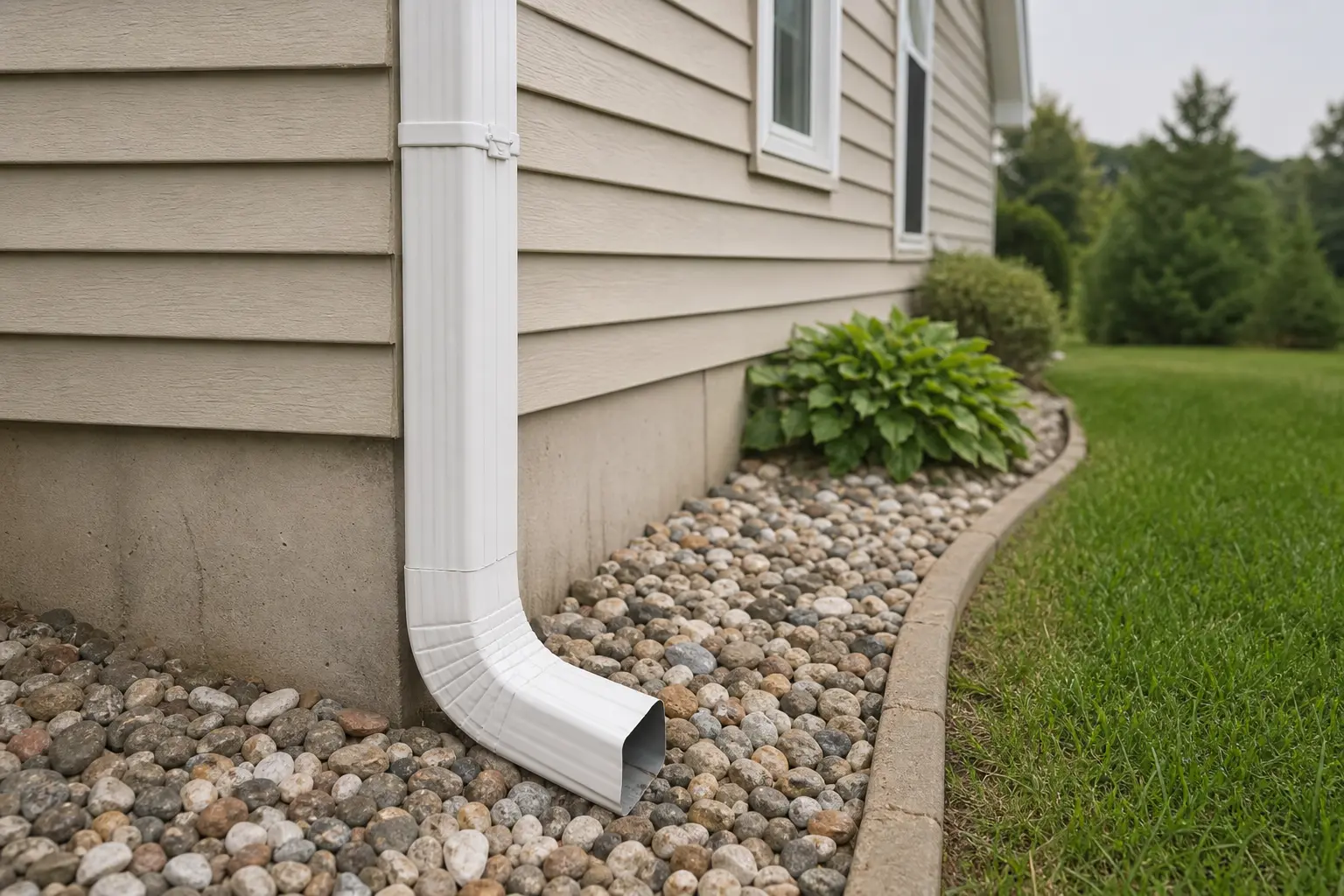
How to calculate required downspout diameter for your roof area
The general rule used by most gutter contractors is that one square inch of downspout cross-section handles roughly 100 square feet of roof area under moderate rainfall. For higher-intensity regions like the Capital Region, that ratio tightens. A standard 2×3-inch rectangular downspout (about 6 square inches of cross-section) handles approximately 600 square feet of roof area.
A 3×4-inch rectangular downspout handles closer to 1,200 square feet.
Most Capital Region homes between 1,200 and 2,500 square feet use 3×4-inch downspouts on 5-inch gutters. Homes with larger roof planes, steep pitches, or multiple roof valleys benefit from additional downspout locations rather than simply moving to a bigger single pipe.
Contractors working in high-intensity rainfall regions sometimes reference guidance from resources like Gutter Empire Portland’s installation guide for rainy regions to confirm spacing strategies before finalizing a layout.
Pitch and slope impact on drainage efficiency
Your gutter’s pitch toward the downspout outlet affects how quickly water moves through the system. The standard recommended pitch is 1/4 inch of drop for every 10 linear feet of gutter run. A shallower pitch causes water to pool and debris to accumulate.
A steeper pitch helps with drainage but can look uneven on the fascia. Getting this right during seamless gutter installation means water never sits long enough to overflow.
Gutter outlet spacing and multiple downspout configurations
Long gutter runs need more than one outlet. A single downspout at the end of a 40-foot gutter run puts the entire load on one drain point and creates a pressure buildup during intense storms. Best practice is to add a downspout every 20 to 30 linear feet on long runs, or at each corner on homes with large roof planes.
Splitting the load between two smaller downspouts often outperforms one large single outlet.
| Roof Drainage Area | Recommended Downspout Size | Minimum Downspouts |
|---|---|---|
| Up to 600 sq ft | 2×3 inch rectangular | 1 |
| 600, 1,200 sq ft | 3×4 inch rectangular | 1, 2 |
| 1,200, 2,000 sq ft | 3×4 inch rectangular | 2 |
| 2,000+ sq ft | 3×4 inch rectangular | 3 or more |
Downspout Materials and Durability in Capital Region Weather
Aluminum, steel, vinyl, and copper options for wet climates
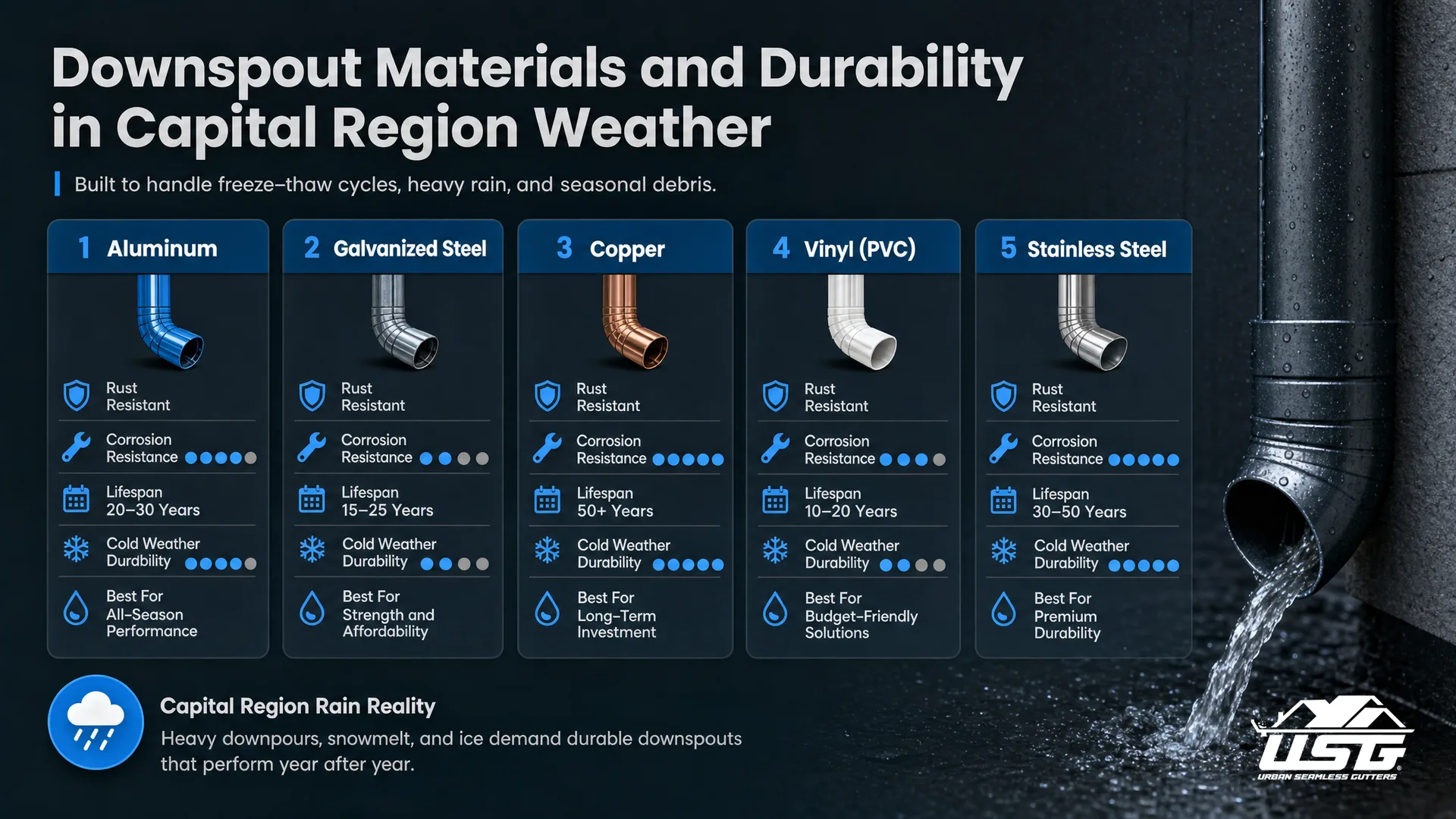
Not all downspout materials perform equally when they go through 40 inches of annual precipitation and multiple freeze-thaw cycles. Here is how the common options stack up:
| Material | Durability | Corrosion Resistance | Typical Lifespan | Best For |
|---|---|---|---|---|
| Aluminum | High | Excellent | 20, 30 years | Most Capital Region homes |
| Galvanized Steel | Moderate | Good (until coating fails) | 15, 20 years | Heavy-duty applications |
| Vinyl (PVC) | Low, Moderate | Excellent | 10, 15 years | Budget installs, mild climates |
| Copper | Very High | Exceptional | 50+ years | Historic homes, premium upgrades |
Aluminum is the most practical choice for the vast majority of Albany-area homes. It does not rust, handles freeze-thaw stress without cracking, and is available pre-painted in colors that match your fascia. Vinyl becomes brittle in cold weather and can crack under the weight of ice buildup.
Copper is beautiful and lasts generations, but the material cost is significantly higher.
Corrosion resistance and maintenance requirements
Even aluminum downspouts benefit from periodic inspection. Check joints and elbow connections each fall before the freeze season begins, and clear any debris from the outlet grate or screen. If you have gutter guards installed, the downspout itself typically stays cleaner with less flushing needed.
You can explore protection options through Urban Seamless Gutters’ gutter guards page for a full look at what reduces long-term maintenance.
Installation Best Practices and Extension Solutions
Proper downspout routing and foundation drainage separation
The most common installation mistake is stopping the downspout at ground level and letting water discharge directly against the foundation. Your downspout needs to terminate at least 4 to 6 feet away from the foundation, and ideally directed toward a natural slope that carries water further from the building.
Elbows at the base of the downspout redirect flow horizontally, and a downspout extension or flexible extender carries it the rest of the way. This is also where understanding how to install a rain gutter downspout correctly makes a real difference. Poor elbow angles or loose joints at the base create leak points that deposit water precisely where you least want it.
Splash blocks, underground extensions, and dry wells
Three common solutions for managing discharge at the downspout base:
- Splash blocks: Precast concrete or plastic troughs placed under the outlet that redirect water away at ground level. Inexpensive, easy to install, but limited effectiveness on flat grades.
- Underground extensions: PVC drain pipe buried below grade and routed to daylight or a storm drain connection. More effective on flat lots or where surface routing is not practical.
- Dry wells: Underground gravel-filled chambers that allow water to percolate slowly into the surrounding soil. Best for lots withgood drainage but poor-draining clay soils, which are common in parts of Albany and Schenectady counties.
Choosing the right solution depends on your lot’s grade, soil type, and how far the downspout outlet sits from the nearest storm drain or natural drainage area. A professional assessment during installation prevents costly rerouting later.
Choosing the Right Gutter Downspout System for Your Home
Assessment checklist: roof size, rainfall intensity, and soil conditions
Before committing to a downspout configuration, work through these key variables for your specific property:
- Total roof drainage area: Measure the horizontal footprint of each roof plane, not the actual sloped surface. Add all sections that drain toward a single gutter run.
- Peak rainfall intensity: Use the Capital Region benchmark of 2.5 to 3 inches per hour for storm sizing.
- Gutter run length: Any run over 30 feet needs a second outlet.
- Soil drainage: Sandy soils drain quickly; clay-heavy soils common in parts of Albany and Schenectady require longer extensions or underground routing.
- Foundation proximity: Discharge must terminate well away from the foundation, with a positive grade directing water further out.
- Existing landscaping: Avoid routing discharge toward garden beds, driveways, or neighboring property lines.
If you are unsure where to start, Urban Seamless Gutters provides free estimates for gutter installation and can walk you through a sizing assessment at no cost before any work begins.
Cost comparison and ROI of quality downspout upgrades
Upgrading from undersized or deteriorating downspouts is one of the highest-return maintenance investments a Capital Region homeowner can make. The cost of foundation repair after repeated water intrusion routinely runs into the thousands. A properly sized, well-routed downspout system costs a fraction of that and lasts decades with minimal maintenance.
| Upgrade Type | Typical Cost Range | Expected Lifespan | Key Benefit |
|---|---|---|---|
| 2×3 to 3×4 downspout swap | $150, $400 per downspout | 20, 30 years | Doubles drainage capacity |
| Downspout extension (surface) | $25, $100 per outlet | 5, 15 years | Moves discharge away from foundation |
| Underground drain pipe | $300, $800 per run | 20, 30 years | Best for flat lots, invisible finish |
| Full downspout replacement | $200, $600 per downspout | 20, 30 years | New material, updated sizing, proper pitch |
Ranges are approximate and vary by labor, material, and site conditions in the Albany area.
For homeowners considering a full system overhaul, pairing downspout upgrades with a gutter replacement ensures your troughs and outlets are sized and pitched as a matched system rather than mixing old gutters with new drain points.

Frequently Asked Questions
What size gutter downspout do I need for my Capital Region home?
Most homes in Albany, Saratoga Springs, and Schenectady benefit from 3×4-inch rectangular downspouts paired with 5-inch seamless gutters. For roof drainage areas under 600 square feet, a 2×3-inch downspout may be sufficient, but the Capital Region’s peak storm intensity makes the larger size a smart default for full-home systems.
If your home has a complex roofline with multiple valleys or a large total footprint, a professional sizing assessment will confirm exactly how many outlets you need and where to place them.
How do I know if my existing downspouts are undersized?
The clearest sign is overflow during moderate to heavy rain: water spilling over the front lip of the gutter before the outlet can drain it. You may also notice erosion channels in the soil directly below overflow points, water staining on your siding, or persistent damp spots in your basement after storms.
A visual inspection during a rainstorm is often the fastest diagnostic. If water backs up anywhere in the gutter rather than moving steadily toward the outlet, the system is not draining fast enough for your roof area.
How do I attach or install a gutter downspout myself?
Learning how to attach a gutter downspout starts with securing the outlet hole through the gutter bottom, fitting the drop outlet connector, and attaching the first elbow section to direct the pipe against the wall. Straps or brackets fasten the vertical pipe to the siding every 4 to 6 feet. At the base, an other elbow redirects water horizontally, and an extension carries it away from the foundation.
While the basic steps for how to install a gutter downspout are manageable for a handy homeowner, getting the pitch of the gutter run correct, sealing all joints properly, and routing the discharge away from the foundation often benefits from professional help. Improper sealing at the outlet connection is the most common cause of behind-the-fascia leaks.
What is the best material for downspouts in cold climates like Albany?
Aluminum is the top choice for the Capital Region. It does not rust, tolerates freeze-thaw cycles without cracking, and is available in pre-painted finishes that match most home exteriors. Vinyl is the weakest option in cold climates because it becomes brittle below freezing and can split under ice load.
Copper is an excellent long-term investment for historic homes but carries a significantly higher upfront material cost.
For most homeowners, aluminum downspouts on seamless aluminum gutters offer the best combination of durability, appearance, and value across a 20 to 30-year lifespan.
How far should a downspout extension reach from the foundation?
Building professionals and drainage guidelines consistently recommend a minimum of 4 to 6 feet between the downspout outlet and the foundation wall. On homes with flat grades or clay-heavy soil, extending discharge even further, or routing it underground to a remote outlet, provides much stronger protection.
A simple surface extender handles many situations, but if your lot does not have a natural slope away from the house, an underground PVC pipe routed to daylight is a more reliable long-term solution. The SMACNA Downspout and Gutter Sizing Calculator can also help you think through flow volumes when planning discharge routing.
Does downspout placement affect gutter guard performance?
Yes. When outlets are spaced too far apart, debris and water can build up in the middle sections of a gutter run, reducing the effectiveness of any gutter guard system. Properly spaced downspouts keep water moving steadily through the trough, which helps micromesh and other guard styles shed debris more effectively.
If you are adding guards to an existing system, it is worth having a contractor evaluate your outlet placement at the same time. You can learn more about guard options through Urban Seamless Gutters’ gutter guard installation guide for Capital Region homeowners.
 Ready for a free quote? Share a few details with Urban Seamless Gutters, we’ll help you choose the right next step. Get a Free Quote |