



If you own a home in Malta, NY, you already know that the Capital Region’s seasons are not gentle. Spring snowmelt, summer downpours, and fall leaf accumulation all test your gutters repeatedly throughout the year. Getting expert gutter services in Malta means more than hiring someone with a ladder.
It means working with professionals who understand local drainage needs, know the right materials for New York’s freeze-thaw cycles, and can spot small problems before they become expensive ones. This guide walks you through everything involved in a proper gutter project, from preparation through long-term maintenance. Whether you’re dealing with an installation, a repair, or routine upkeep, the steps below apply directly to Malta homeowners looking for reliable, lasting results.
Key Takeaways
- Malta’s seasonal weather demands gutters that handle heavy rainfall, ice dams, and debris from surrounding trees.
- Proper preparation and material selection before the job starts determines the long-term outcome.
- Seamless aluminum gutters are the most practical choice for most Capital Region homes.
- Skipping the final inspection is the most common mistake that leads to callbacks and water damage.
- Routine maintenance twice a year extends gutter life significantly and protects your foundation, fascia, and landscaping.
What You Need Before You Start
Before any gutter work begins in Malta, a little planning saves a lot of headaches. Whether you’re managing a repair or overseeing a full installation, knowing what materials and conditions are required upfront keeps the project on track.
Expert gutter services in Malta start with a thorough site assessment, the right materials for local weather, and a clear understanding of the home’s drainage layout before a single fastener is installed.
Tools and Materials Checklist
For a standard residential gutter project in the Capital Region, the following are typically required:
| Item | Purpose | Notes |
|---|---|---|
| Seamless aluminum gutter stock | Primary drainage channel | Available in 4-inch and 5-inch widths |
| Downspouts and elbows | Direct water away from foundation | Aluminum or galvanized steel |
| Hidden hangers (fascia brackets) | Support gutter along roofline | Every 24, 30 inches recommended |
| End caps and miters | Seal corners and terminations | Must be properly caulked |
| Gutter sealant (butyl-based) | Waterproof joints and seams | Interior application only |
| Safety ladder with standoffs | Access roofline safely | Standoffs protect gutter lip |
| Chalk line and level | Ensure proper pitch | Aim for 1/4 inch drop per 10 feet |
| Power drill and screws | Secure hangers and downspout straps | Stainless steel screws preferred |
For homeowners planning a seamless gutter installation, note that seamless gutters require a roll-forming machine that fabricates the gutter on-site. This is not a DIY tool, which is one reason most Malta homeowners choose professional installation.
Safety and Prep Considerations
Working at height is genuinely dangerous. Falls from ladders account for a significant share of residential injuries each year, according to the Consumer Product Safety Commission’s ladder safety guidelines. Never work alone on a ladder.
Make sure the fascia board is dry and structurally sound before applying any weight or fasteners against it. Clear the area below the work zone of furniture, planters, and foot traffic. If the roofline runs above a driveway or walkway, use cones or barriers.
In Malta, be aware of overhead utility lines near the roofline before positioning ladders.
Step-by-Step Walkthrough
This section outlines the process a professional team follows when delivering expert gutter services in Malta. Understanding these steps helps you ask better questions and evaluate the quality of work being done on your home.
Step 1: Assess the Current Situation
Start by walking the perimeter of the home and documenting every gutter section. Look for sagging runs, separated joints, rust staining on fascia boards, peeling paint, or soft wood around the roofline. Check downspout outlets for blockages and trace where water exits relative to your foundation.
In Malta, homes with mature trees (particularly maples and oaks near Round Lake Road and the Route 9 corridor) accumulate significant debris. That context matters for deciding whether repairs are sufficient or whether a full replacement makes more sense. You can use the guide on when to repair, clean, add guards, or replace seamless gutters to help frame that decision.
Step 2: Prepare the Work Area
Remove all debris from existing gutters before any fastener work begins. If the fascia is damaged, address that first. Installing new gutters over rotted wood defeats the purpose entirely and will cause early failure.
Snap a chalk line from the high point (usually the end farthest from the downspout) to the low point to establish proper pitch. A consistent slope ensures water flows without pooling. Adjust hanger positions before drilling so the run is committed to the correct angle.
Step 3: Execute the Core Work
For a new installation, the gutter stock is fabricated on-site using a roll-forming machine, then cut to length and fitted with end caps, miters, and drop outlets. Hangers go in first, spaced no more than 30 inches apart, with tighter spacing near corners and around downspout drops. Seal every joint, end cap, and miter from the inside using butyl-based gutter sealant.
Slip joints should overlap by at least 6 inches. Downspouts attach to the fascia or siding with straps every 6 feet and should terminate at least 4 feet from the foundation, ideally directed toward a slope or drainage bed. For repairs, isolate the problem area, clean it dry, re-seal or replace the section, and confirm the pitch is still correct.
Many gutter repair jobs in Malta involve re-securing pulled hangers or resealing joints that opened during winter freeze-thaw cycles.
Step 4: Inspect Quality and Wrap Up
Run water through each gutter section using a garden hose. Start at the high point and check that water flows continuously to the downspout without backing up or spilling over the lip. Watch each joint for drips.
Confirm all downspout elbows are seated firmly and that discharge is directed away from the home. Document the completed work with photos if you’re managing a contractor. A quality professional will do this automatically and review findings with you before leaving the site.
Common Mistakes to Avoid
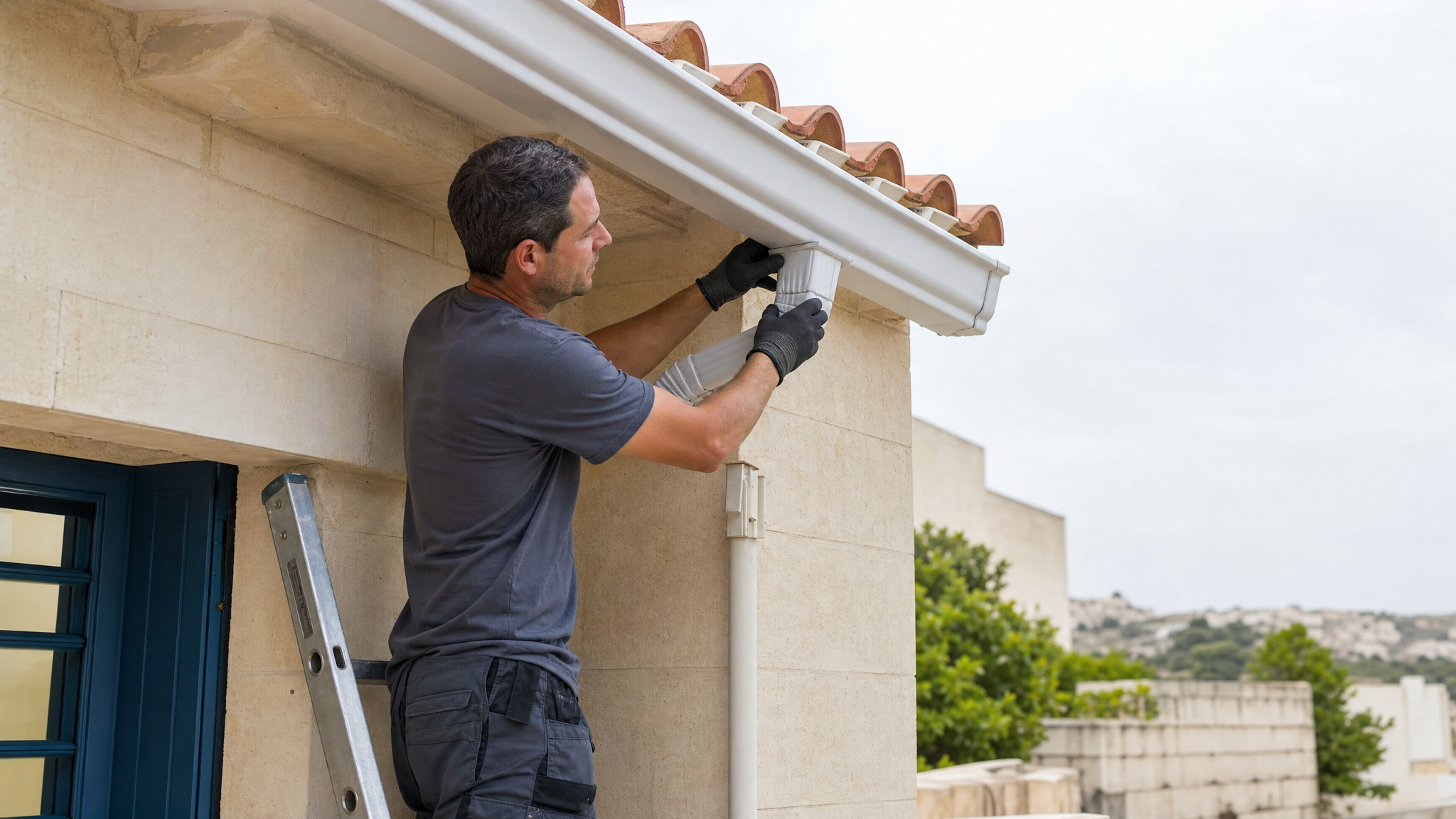
Even experienced DIYers and rushed contractors make avoidable errors on gutter projects. Knowing these pitfalls helps you evaluate the quality of any work being done on your home.
Skipping Prep or Planning Steps
Installing gutters without checking fascia condition first is the most common source of early failure. Rotted wood cannot hold hangers securely, and the gutter will pull away within one or two winters. Always assess the substrate before committing to any hardware.
Failing to calculate pitch before marking hanger positions is another frequent issue. Once holes are drilled, correcting the angle becomes time-consuming. Take the extra ten minutes to chalk a proper line.
Cutting Corners on Quality Checks
Using the wrong sealant or applying it to a wet surface creates leak points that appear within weeks. Butyl-based sealant applied to a clean, dry interior surface is the industry standard. Some contractors skip the internal seal entirely on slip joints, which almost always leads to callbacks.
Inadequate hanger spacing is a structural problem. Gutters loaded with water and debris weigh significantly more than empty ones. Spacing hangers beyond 30 inches risks sagging, especially after a heavy Capital Region snowfall.
Rushing the Final Inspection
Testing with water takes ten minutes and catches problems that would otherwise show up during the first rainstorm. Skipping it is the single most avoidable mistake. A professional crew should always test flow before leaving the site.
Timeline, Cost, and When to Call a Pro
Typical Project Timeline
| Project Type | Typical Duration | Notes |
|---|---|---|
| Single-family gutter cleaning | 1, 2 hours | Depends on debris load and access |
| Gutter repair (minor joints/hangers) | 2, 4 hours | Longer if fascia replacement needed |
| Full seamless gutter installation | 4, 8 hours | Per average-size Malta home |
| Gutter guard installation | 2, 5 hours | Added to installation or as standalone |
Budget Ranges and Cost Drivers
Gutter project costs vary based on linear footage, material choice, home height, and condition of the existing fascia. For a fuller picture of what drives pricing in the Capital Region, the page on average gutter installation costs breaks down the major factors clearly. Aluminum gutters are the most cost-effective option for most Malta homeowners and hold up well across the region’s climate range.
Copper and steel options exist for specific architectural needs but come at a significantly higher price point. Micromesh gutter guards add upfront cost but reduce cleaning frequency and protect downspouts from debris blockages over the long term.
Signs You Need Professional Help
Call a pro when you notice: water staining on siding below the roofline, fascia boards that feel soft or spongy, gutters that visibly sag or pull away from the home, or water pooling near your foundation after rain. These are not cosmetic issues. Left unaddressed, they lead to foundation damage, basement water intrusion, and landscape erosion.
Malta’s proximity to Saratoga Lake and the surrounding wetland areas means drainage is not something to defer. If you’re seeing any of the signs above, contact Urban Seamless Gutters for a professional assessment.
Maintenance and Long-Term Care
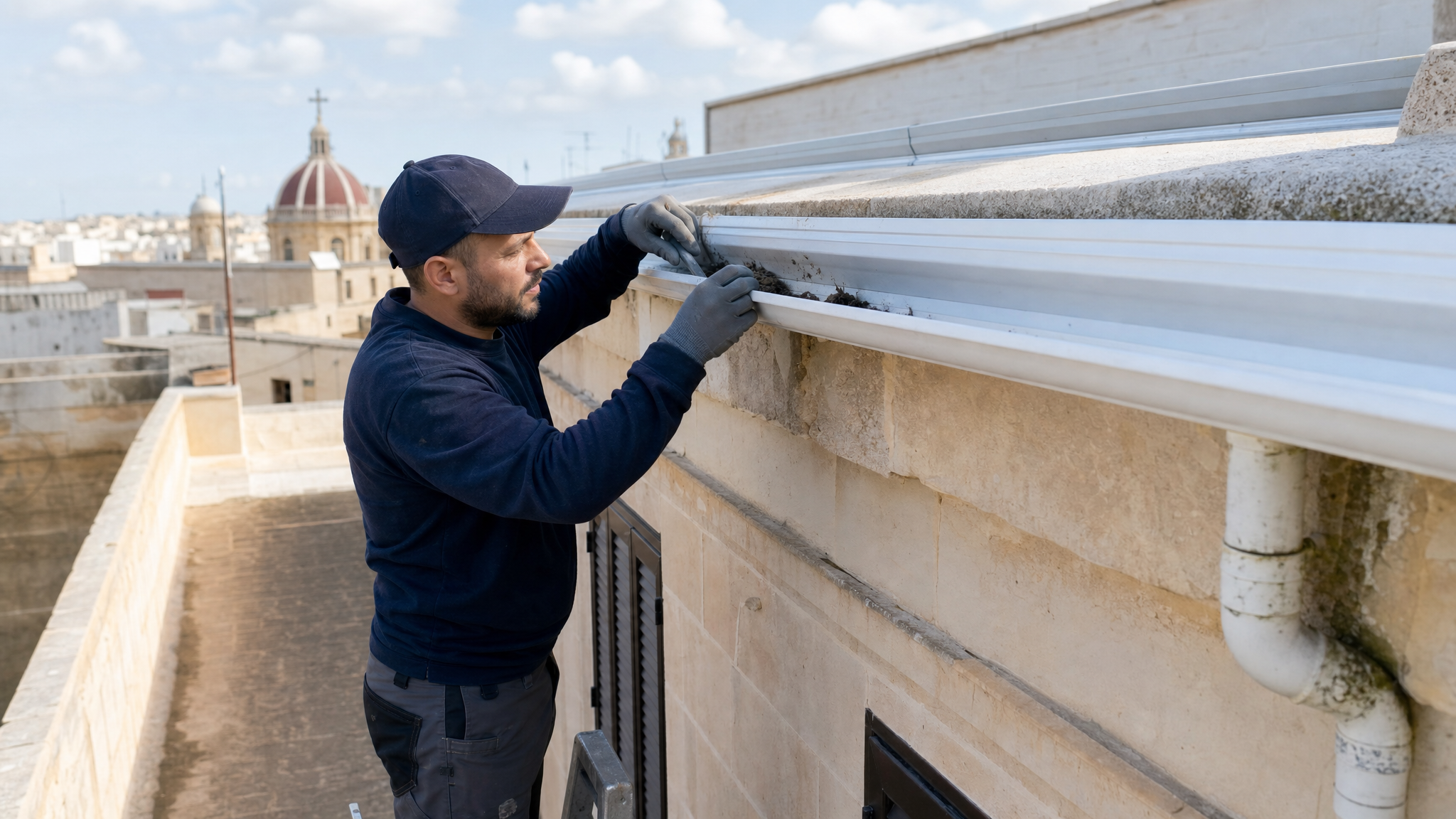
Routine Checks
Twice-yearly cleaning keeps gutters functional and extends their lifespan considerably. The best times in the Capital Region are late spring (after tree pollen and maple seeds settle) and late November after the last leaf drop. If you have pine trees overhanging the roofline, a third cleaning in late summer is worth considering.
Between cleanings, inspect visible sections after major storms. High winds common in Malta during spring and fall can shift hangers or deposit large debris that blocks outlets. A quick visual pass from the ground with binoculars catches problems early.
Professional gutter cleaning services include a full inspection as part of each visit, which adds value beyond just debris removal.
Extending Results Over Time
Micromesh gutter guards are the most effective way to reduce maintenance frequency while keeping gutters functioning properly. Unlike foam inserts or basic screen covers that competitors like K-Guard promote as all-in-one solutions, micromesh guards allow water through while blocking debris at the surface. They are compatible with seamless aluminum gutters and work well in Malta’s environment with its mix of deciduous and evergreen trees.
Downspout extensions and underground drainage solutions also extend the life of the entire system by ensuring water exits well away from the foundation. Pair that with periodic resealing of joints every few years and your gutters should perform reliably for 20 or more years with proper care.
Conclusion and Next Steps
Quick Recap
Getting expert gutter services in Malta done right comes down to preparation, proper materials, sound installation technique, and a committed final inspection. Malta homeowners deal with genuine seasonal stress on their drainage systems, and shortcuts at any stage tend to show up quickly.
Recommended Next Actions
Start with aperimeter walk around your home and note any visible problems. If you’re unsure whether repairs or a full replacement makes more sense, contact Urban Seamless Gutters for a free estimate and professional assessment. The team serves Malta and the broader Saratoga County area and can give you a clear picture of what your home actually needs.
If gutter guards are on your radar, review the step-by-step gutter guard installation guide for Capital Region homeowners before your next service visit. It explains the options clearly so you can have an informed conversation with your contractor.
Frequently Asked Questions
How often should gutters be cleaned in Malta, NY?
Most Malta homes benefit from two professional cleanings per year: once in late spring after maple seeds and pollen settle, and again in late November after the final leaf drop. Homes with pine trees or heavy canopy coverage may need a third cleaning in late summer. Skipping cleanings allows debris to compact and block outlets, which puts pressure on joints and can accelerate wear.
What type of gutters work best for Capital Region homes?
Seamless aluminum gutters are the most practical choice for the vast majority of Malta homeowners. Aluminum resists rust, handles freeze-thaw cycles well, and is available in a wide range of colors to match your home’s exterior. Copper is a premium option with a longer lifespan but comes at a significantly higher cost.
Steel is durable but prone to rust at cut ends without proper sealing.
How do I know if my gutters need repair or full replacement?
Isolated joint leaks, a single pulled hanger, or a minor section of damage are usually repair situations. If you’re seeing widespread sagging, multiple separated seams, gutters pulling away from the fascia along several runs, or fascia boards that are soft and rotted underneath, replacement makes more economic sense. A professional inspection removes the guesswork.
Urban Seamless Gutters offers free estimates so you can get an honest assessment without any commitment.
Are micromesh gutter guards worth the investment for Malta homes?
Yes, for most Malta homeowners they are. Micromesh gutter guards allow water to pass through while blocking leaves, seeds, pine needles, and shingle grit at the surface. They reduce cleaning frequency and protect downspouts from blockages caused by the area’s mix of deciduous and evergreen trees. The upfront cost is offset over time by fewer service calls and reduced risk of overflow damage.
Some national brands like LeafFilter market similar products nationally, but local installation ensures the guards are fitted correctly to your specific gutter profile and roofline pitch.
What causes gutters to pull away from the fascia?
The most common cause is hanger spacing that is too wide, especially after repeated loading from snow, ice, and saturated leaf debris. Over time, the fasteners work loose from the fascia. A secondary cause is rotted fascia wood that can no longer hold screws securely.
In both cases, the fix involves either re-fastening with longer screws into solid wood or replacing the damaged fascia section before reinstalling the gutter. Malta’s winters accelerate this process because ice in the gutter adds significant weight to the system.
How long does a professional gutter installation take for a typical Malta home?
A standard single-family home in Malta takes 4 to 8 hours for a complete seamless gutter installation, depending on the total linear footage, number of corners, home height, and whether any fascia repair is needed first. Most installations are completed in a single day. Your contractor should walk the site with you before starting and confirm the timeline based on your home’s specific layout.
Can I add gutter guards to existing gutters, or do I need new ones first?
In most cases, gutter guards can be added to existing gutters as long as the gutters are in good structural condition, properly pitched, and securely fastened to the fascia. If the existing gutters are sagging, leaking at multiple joints, or nearing the end of their useful life, it makes more sense to replace the gutters first and add guards as part of the same project. Combining both into one visit saves time and reduces the cost compared to scheduling them separately.