



Key Takeaways
- Inspect your fascia boards and soffit before requesting any quote, hidden rot can double your project cost.
- Seamless gutters outperform sectional systems for leak prevention and are the standard for most Capital Region homes.
- Proper slope (roughly 1/4 inch drop per 10 feet of run) is the single most common installation detail homeowners overlook.
- Ask every contractor for proof of insurance, a written scope, and a warranty on both labor and materials.
- Albany’s freeze-thaw cycle makes gutter guards and correct downspout placement especially important.
Why How to Rain Gutter Installation Matters Now
Albany sits in a region where spring snowmelt, summer thunderstorms, and fall leaf drop all stress gutters differently. When a system fails, whether from poor installation, clogged gutters, or damaged hangers, the water goes somewhere it shouldn’t. That means foundation erosion, basement leaks, rotted fascia, and landscape washout.
Properly installed gutters direct water at least 6 feet away from the foundation, protecting the structural integrity of your home year-round.
Most homeowners only think about gutters after something goes wrong. Getting ahead of that cycle means knowing what good rain gutter installation looks like before you need it urgently.
What Has Changed Recently
Material options and installation standards have evolved. Aluminum seamless gutters remain the dominant choice for residential homes in the Capital Region because they resist rust, hold paint well, and can be formed on-site to fit any roofline without seams. Micromesh gutter guards have also become far more effective and accessible, changing how homeowners think about long-term maintenance after installation.
Local building patterns matter too. Homes in Clifton Park, Saratoga Springs, and Schenectady often have varied rooflines, dormers, and steep pitches that require customized hanger spacing and downspout placement. A one-size-fits-all approach rarely holds up through a Capital Region winter.
What Readers Need to Understand First
Before you call any company, understand that gutter installation is not just hanging a trough on your roofline. It involves assessing fascia condition, calculating water volume for your roof’s square footage, planning downspout locations to protect your foundation, and choosing materials that match your home’s architecture and your maintenance preferences. Our rain gutter installation guide for Albany and Capital Region homes covers these regional specifics in detail.
Common How to Rain Gutter Installation Mistakes to Avoid
Skipping a fascia inspection before installation is the most expensive mistake Albany homeowners make, it turns a straightforward gutter job into a multi-trade repair project.
Most problems with new gutters trace back to decisions made before a single bracket was fastened. Knowing what to watch for protects your investment.
Mistake 1 and How It Hurts Results
Ignoring fascia and soffit condition before installation is the top mistake. If the wood behind your gutter system is soft, rotted, or pulling away from the rafter tails, new gutters will fail within months regardless of how well they’re hung. Hangers pull loose, sections sag, and water pools exactly where you don’t want it.
According to the Angi gutter installation checklist, fascia inspection is a prerequisite step that contractors should complete before any material is ordered.
Ask your contractor to show you the fascia condition before work starts. If they skip this step without explanation, that’s a red flag.
Mistake 2 and How to Spot It Early
Incorrect slope is the second most common issue, and it’s invisible to most homeowners until water starts pooling in the gutter trough. Gutters should pitch slightly toward each downspout, roughly 1/4 inch of drop for every 10 feet of horizontal run. Too little slope and debris sits stagnant.
Too much slope and the gutter looks visually off and may not capture all the water coming off the roof edge.
You can spot early signs of slope problems after a heavy rain. If you see standing water in the gutter trough more than a few hours after rainfall stops, the pitch is likely off.
How to Fix Each Mistake Quickly
For fascia damage, address it before gutter installation begins. A good contractor will either handle fascia repair as part of the scope or coordinate with a carpenter. Don’t let anyone attach new gutters to compromised wood.
For slope problems on an existing system, rehinging is usually straightforward. A technician resets the hanger brackets to the correct pitch without replacing the gutter material itself. Catching it early saves the cost of a full replacement.
If your current system needs attention, gutter repair services can address slope and hanger issues before they become bigger problems.
Step-By-Step How to Rain Gutter Installation Improvements
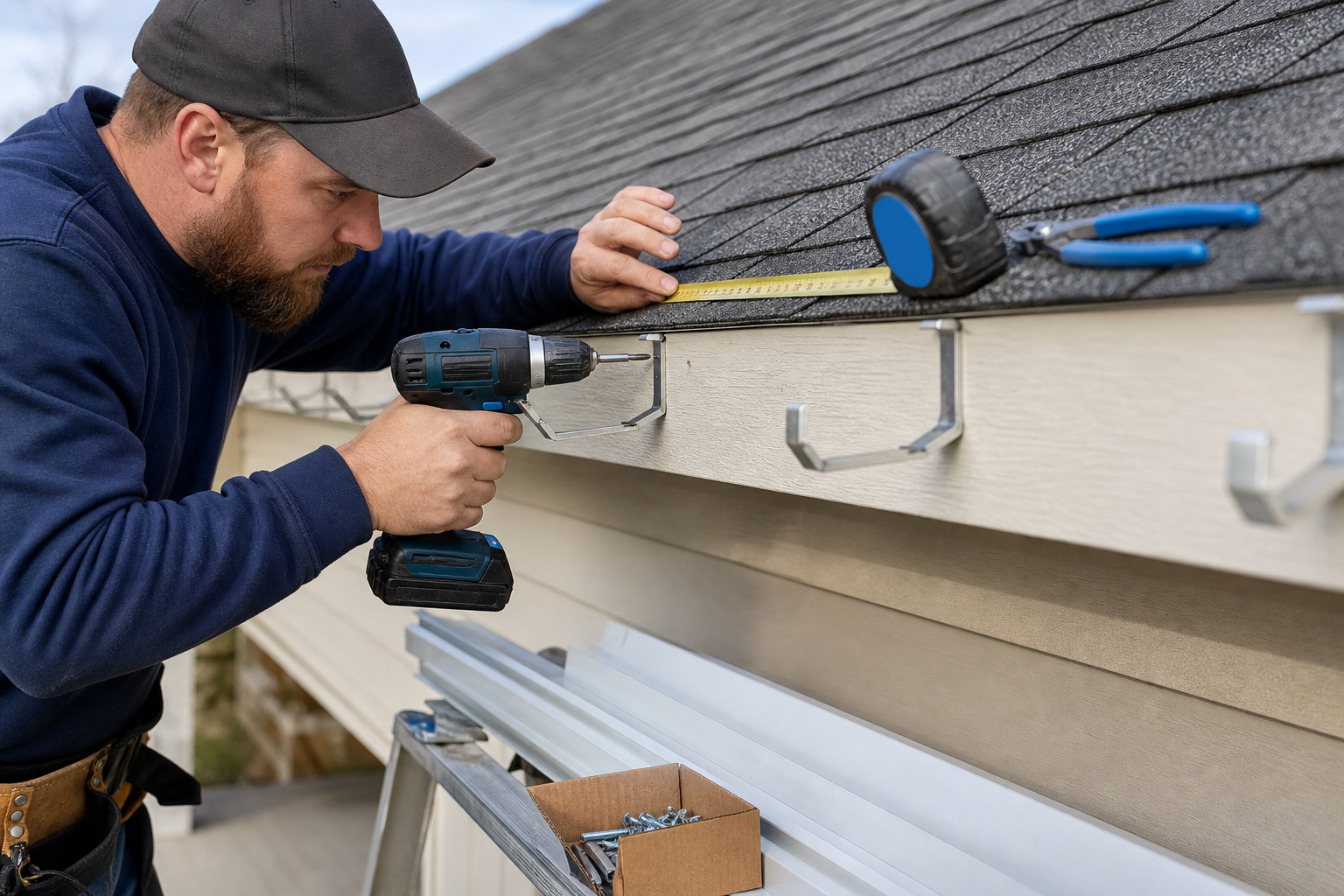
This is where the checklist becomes practical. Use these eight steps as your framework before and during the hiring process.
Audit Your Current Approach
Walk your roofline after the next rainstorm.
Look for water overflowing the front of the gutter, dripping behind the gutter, or pouring from joints between sections. Each symptom points to a different problem, overflow suggests clogging or undersized gutters, behind-the-gutter drip suggests improper flashing or slope, joint leaks suggest sealant failure in sectional systems.
Inspect the fascia boards.
Press gently on the wood at several points. Soft spots, discoloration, or areas where the paint is bubbling or peeling suggest moisture damage underneath. Document what you find with photos before any contractor arrives.
Count your downspouts and map where they drain.
The general rule is one downspout for every 30 to 40 linear feet of gutter, though roof pitch and regional rainfall intensity can require more. Also confirm that each downspout extension or splash block directs water away from the foundation, not toward it.
Implement the Highest-Impact Fixes
Choose seamless over sectional.
Seamless gutters eliminate the joints where most leaks begin. They’re formed from a single piece of aluminum cut to the exact length of each run, which means no caulked seams to fail over time. For most Albany homes, seamless gutter installation is the practical standard, not an upgrade.
Match gutter size to your roof.
Most residential rooflines in the Capital Region are well-served by 5-inch K-style gutters. Homes with steep pitches or large roof planes that drain into a single run may need a wider profile or additional downspouts to handle peak volume during heavy summer storms.
Plan downspout placement strategically.
Downspouts shouldn’t discharge next to your foundation, into garden beds, or toward a neighbor’s property. Underground extensions, pop-up emitters, or dry creek beds are all options depending on your yard’s grading and drainage.
Track and Refine Over Time
Schedule a follow-up inspection after the first heavy rain.
Even well-installed gutters benefit from a post-installation check. You want to confirm slope is holding, hangers are secure, and downspouts are flowing freely without backup.
Add gutter guards if leaf debris is a recurring problem.
Homes near mature trees, common throughout Albany, Cohoes, and Saratoga Springs, deal with annual leaf accumulation that can clog gutters and add weight that loosens hangers. Micromesh gutter guards keep debris out while letting water flow through, reducing maintenance significantly.
Tools, Examples, and Proof Points
Recommended Tools or Workflows
You don’t need to be a contractor to evaluate your own gutters before hiring. A few simple tools help you gather useful information before the first estimate arrives.
| Tool | Purpose | Notes |
|---|---|---|
| Flashlight | Inspect inside the gutter trough | Look for standing water, rust, or debris buildup |
| Level or smartphone level app | Check slope along the gutter run | Pitch should drop toward each downspout |
| Soft probe (screwdriver handle) | Test fascia board firmness | Soft spots indicate rot |
| Measuring tape | Count linear footage | Helps you verify contractor measurements |
| Garden hose | Run water through the system | Reveals leaks, overflow points, and drainage issues |
Real-World Examples
A homeowner in Clifton Park noticed water pouring behind a gutter section every time it rained. After inspection, the fascia board had partially rotted away from the rafter tail, pulling the hanger out of alignment. The fix required replacing a 4-foot section of fascia before reattaching the gutter, a repair that would have been missed if they had just replaced the gutter without investigating first.
Comparison and Decision Guide

When to Choose Each Approach
Not every situation calls for full replacement. Here’s how to think through your options.
| Situation | Recommended Action | Typical Reason |
|---|---|---|
| Gutters less than 10 years old, minor leaks | Repair sealant and hangers | Cost-effective if structure is sound |
| Gutters sagging or pulling from fascia | Inspect fascia, then rehang or replace | Fascia damage often drives the decision |
| Sectional gutters leaking at joints | Replace with seamless system | Joints are the primary failure point |
| Frequent clogging near trees | Install micromesh gutter guards | Reduces maintenance and debris weight |
| Foundation moisture or basement seepage | Add or redirect downspouts | Water placement,not just pipe size, matters most |
Cost, Effort, and Timeline Tradeoffs
Understanding what each path typically costs helps you evaluate quotes with confidence. These are realistic ranges for the Capital Region market, actual pricing depends on linear footage, material choices, fascia condition, and site complexity.
| Service | Typical Scope | Relative Effort | Timeline |
|---|---|---|---|
| Gutter repair (hangers, sealant) | Spot fixes on existing system | Low | 1, 2 hours |
| Seamless gutter replacement | Full system, average home | Moderate | Half to full day |
| Fascia repair + gutter install | Combined scope | Higher | 1, 2 days |
| Gutter guard installation | Added to new or existing gutters | Low-moderate | 2, 4 hours |
| Downspout additions or rerouting | 1, 3 downspouts | Low | 1, 3 hours |
For a deeper look at what affects pricing in Albany and surrounding counties, the average cost of gutter installation breakdown covers material grades, linear footage estimates, and what to expect from a fair quote.
According to the Angi gutter installation checklist, homeowners who gather multiple quotes and ask detailed questions about scope and warranty consistently report better outcomes than those who hire based on price alone.
Conclusion and Next Steps
Main Points to Remember
Getting rain gutter installation right in Albany starts before a single contractor arrives. Your fascia condition, roof drainage volume, downspout placement, and material choice all shape whether a new system performs well for ten-plus years or needs repairs within the first two. The eight steps in this checklist give you a clear framework, from walking your roofline after a rainstorm to asking the right questions about slope, warranty, and follow-up service.
Seamless gutters remain the right call for most Capital Region homes. They eliminate the weakest points in a sectional system, hold up through freeze-thaw cycles, and look cleaner along your roofline. Pair them with micromesh gutter guards if your property has mature trees nearby, and you cut your ongoing maintenance significantly.
What to Do Next
The smartest next move is a professional assessment before committing to any scope of work. A trained eye will catch fascia problems, drainage issues, and slope errors that are easy to miss from the ground. From there, you get a written quote that reflects your home’s actual needs, not a guess.
If you’re unsure whether you need a repair, a replacement, or something in between, the guide on when to repair, clean, add guards, or replace seamless gutters walks through exactly that decision for Capital Region homeowners.
Frequently Asked Questions
How long does rain gutter installation typically take?
Most residential gutter installations in the Capital Region are completed in a single day. A standard home with a straightforward roofline and no fascia repairs needed usually takes four to six hours. Larger homes, steep pitches, or projects that include fascia repair or gutter guard installation may run into a second day.
The best way to get an accurate timeline is to ask your contractor directly during the estimate, and confirm whether fascia work is included in that window or scheduled separately.
What is the difference between seamless and sectional gutters?
Seamless gutters are formed from a single continuous piece of aluminum cut to the exact length of each run. They have no joints along the horizontal run, which eliminates the most common source of leaks. Sectional gutters are assembled from pre-cut pieces joined with connectors and sealed with caulk, those seams eventually fail, especially through Albany’s freeze-thaw cycles.
For most homeowners in the Capital Region, seamless is the practical choice. The seamless gutter installation step-by-step guide explains exactly how the process works from measurement to final inspection.
Do I need gutter guards installed at the same time as new gutters?
You don’t have to install gutter guards at the same time, but doing so is usually more cost-effective. When guards are added during the original installation, the crew is already on-site and the gutters are freshly cleaned and aligned. Retrofitting guards to an existing system requires a separate visit and sometimes minor adjustments to accommodate the guard profile.
If your property has mature trees, which is common in Albany, Cohoes, and the surrounding neighborhoods, adding micromesh guards at installation makes the most financial sense over a five to ten year horizon.
What questions should I ask a gutter contractor before hiring?
Start with the basics: Are you licensed and insured in New York State? Do you carry workers’ compensation coverage? What does your warranty cover, and for how long?
Then get specific about the project: Will you inspect the fascia before starting? How do you calculate slope? Where will each downspout discharge, and how far from the foundation?
A contractor who answers these questions directly and in writing is one worth trusting. One who deflects or rushes past them is not. The expert gutter installation services page outlines what a professional scope of work should include.
How often should gutters be cleaned after installation?
For most Albany homes without gutter guards, twice per year is the standard recommendation, once in late spring after tree pollen and seed pods drop, and once in late fall after the leaves are down. Homes near heavy tree cover may need a third cleaning in early summer depending on the species nearby.
With quality micromesh gutter guards installed, many homeowners can reduce cleaning to an annual check rather than a full flush, though inspecting the guards themselves is still good practice after major storms. For ongoing maintenance, gutter cleaning services keep your system flowing freely between installations and repairs.
Is a permit required for gutter installation in Albany?
In most cases, gutter replacement and installation on an existing home does not require a building permit in Albany or the surrounding Capital Region municipalities. Gutters are generally classified as maintenance work rather than structural modification.
That said, if your project involves significant fascia reconstruction, changes to drainage that affect grading, or new construction, it’s worth confirming with your local municipality before work begins. Your contractor should be familiar with local requirements and able to advise you on whether any permits apply to your specific scope.
 Ready for a free quote? Share a few details with Urban Seamless Gutters, we’ll help you choose the right next step. Get a Free Quote |