



Key Takeaways
- Micromesh gutter guards filter out debris at the surface level, while traditional open gutters collect everything and rely on regular cleaning to stay clear.
- Micromesh systems carry a higher upfront cost but typically reduce long-term maintenance significantly.
- Traditional gutters are more affordable to install but require cleaning 2 to 4 times per year in tree-heavy Capital Region neighborhoods.
- The best choice depends on your tree coverage, roof pitch, budget, and tolerance for seasonal maintenance.
- Both systems benefit from professional installation to perform correctly and protect your home’s drainage path.
- According to K-Guard Leaf Free Gutter System, industry guidance aligns with these recommendations.
Table of Contents
- Quick overview of micromesh gutter guards vs options
- Side-by-side comparison
- Pros and cons of each approach
- How to choose the right option
- Conclusion and recommendation
- Top reader questions
Quick overview of micromesh gutter guards vs options
Before comparing details, it helps to understand what each system actually does. Traditional gutters are open-top channels, typically K-style aluminum, that collect rainwater and direct it away from your foundation. They work well on their own but accumulate leaves, pine needles, shingle grit, and other debris over time.
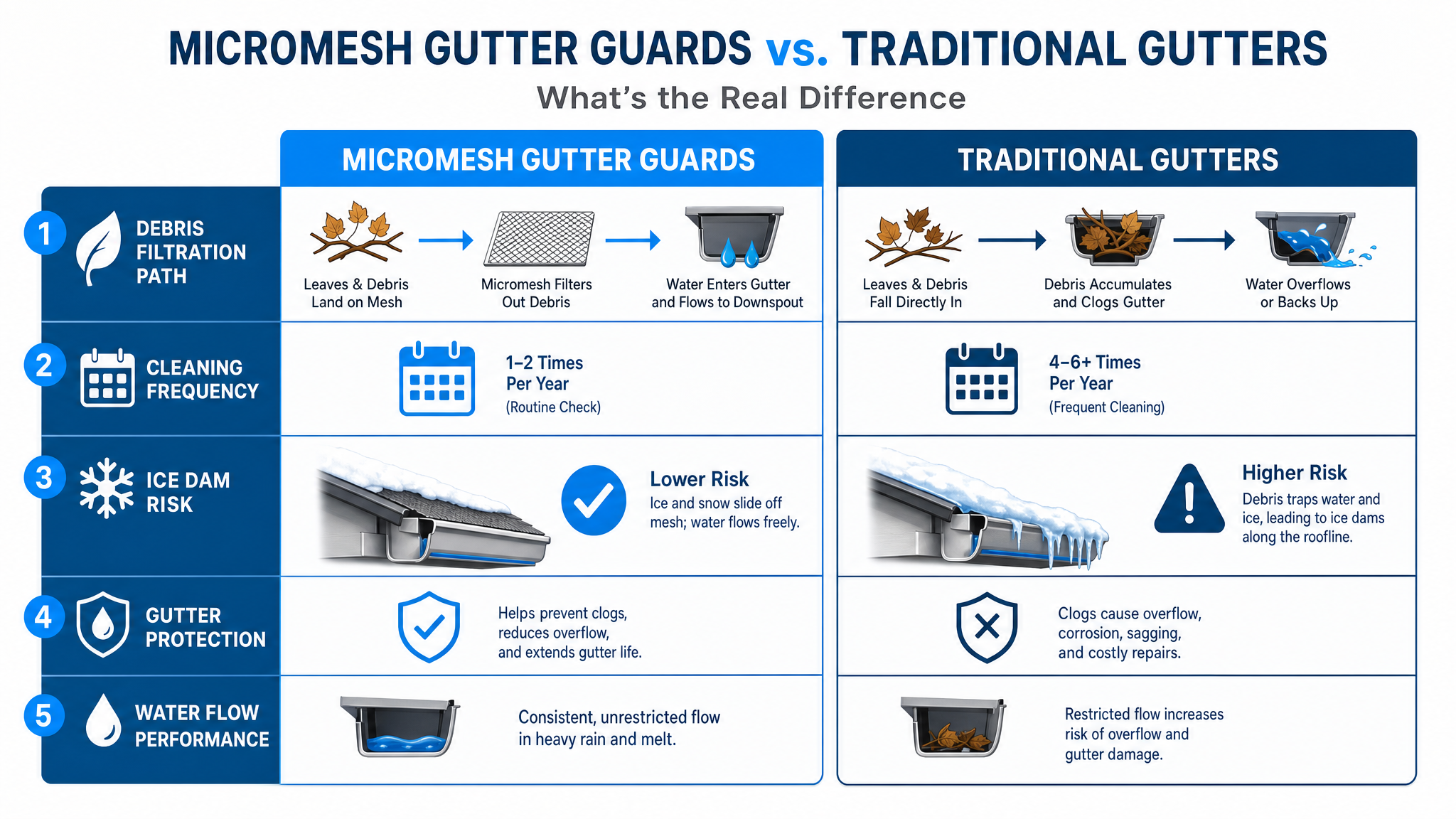
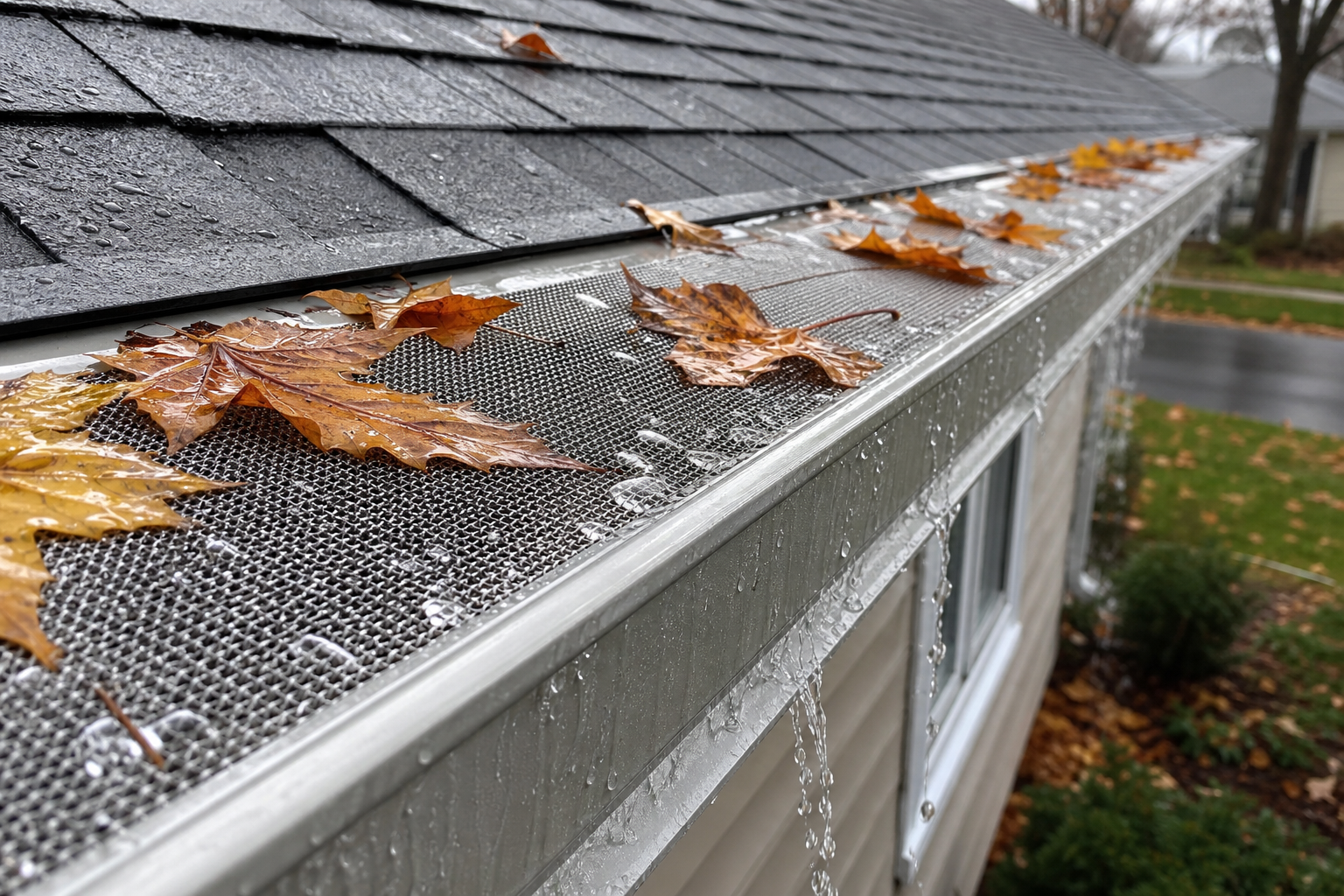
Micromesh gutter guards attach over your existing or new gutters with a fine stainless steel mesh screen. Water flows through the tiny perforations while debris stays on top and blows or dries off. The mesh openings are small enough to block most organic material, including the pine needles and seed pods common in the Capital Region.
You can learn more about the installation process on our micromesh gutter guards installation page.
Who each option is for
Traditional open gutters are a practical fit for homeowners with minimal tree coverage, a tight installation budget, or a willingness to clean gutters regularly each season. They’re also the right starting point when your existing gutters are in good shape but guards haven’t been added yet. Micromesh guards are a stronger fit for homes surrounded by mature oaks, maples, or pine trees common throughout Albany, Saratoga Springs, and Schenectady.
If climbing a ladder twice a year makes you uneasy, or if you’ve dealt with ice dams and overflows caused by debris buildup, micromesh is worth the upgrade.
Key differences at a glance
| Feature | Micromesh Gutter Guards | Traditional Open Gutters |
|---|---|---|
| Debris filtration | Fine mesh blocks most debris | Open, debris enters freely |
| Cleaning frequency | Occasional rinse (approx. once/year) | 2, 4 times per year typical |
| Upfront cost | Higher (guard + installation) | Lower |
| Lifespan | 20+ years with proper install | 20, 30 years for aluminum |
| Ice dam risk | Reduced with proper pitch | Higher in northern climates |
| DIY-friendly | Not recommended | Possible but risky |
Side-by-side comparison
Understanding the differences on paper is one thing. Knowing how each system behaves through Albany’s wet springs, summer storms, and leaf-heavy falls tells the real story.
Performance and durability
Micromesh gutter guards vs open gutters perform very differently in high-debris environments. Micromesh systems excel when leaves, maple helicopters, and pine needles are falling constantly. The mesh surface sheds most material when dry, and water tension pulls rain through the perforations and into the gutter channel below.
Traditional gutters don’t filter anything, so debris accumulates in the trough. Left uncleaned, wet leaf packs create standing water, which accelerates corrosion and can cause sagging. In freezing temperatures, clogged gutters also increase ice dam formation along the roofline, a real concern for Capital Region homeowners dealing with heavy snowfall from November through March.
Both systems are durable when installed correctly. Aluminum gutters typically last 20 to 30 years. Stainless steel micromesh guards are similarly long-lived when sized and pitched properly, and they don’t rust or warp with seasonal temperature swings.
Cost and maintenance tradeoffs
Traditional gutter installation costs less upfront. According to general industry ranges, standard K-style aluminum gutter installation typically runs $4 to $9 per linear foot depending on material grade and labor. Adding micromesh guards increases the per-linear-foot cost, but reduces the ongoing expense of professional cleaning visits.
If you pay for gutter cleaning twice a year, those costs add up over a 10 to 15-year period. Micromesh systems shift the math by reducing how often you need cleaning service. That said, no gutter guard eliminates maintenance entirely.
Fine debris like shingle sediment and pollen can still coat the mesh surface over time. You can review realistic cost expectations on the average cost of gutter installation page for the Capital Region.
Pros and cons of each approach
Every homeowner’s situation is different. Here’s an honest look at where each system shines and where it falls short.
Best-fit scenarios
Micromesh guards are a strong investment for:
- Homes with mature deciduous trees dropping heavy leaf loads each fall
- Homeowners who want to reduce ladder-climbing and seasonal maintenance
- Properties in Clifton Park, Malta, or Round Lake with significant pine tree coverage
- Anyone who has previously dealt with gutter overflows, basement seepage, or ice dams
Traditional open gutters work well for:
- Newly built homes in open subdivisions with minimal tree canopy
- Homeowners budgeting tightly for initial construction or renovation
- Properties where regular maintenance is already part of the seasonal routine
- Situations where gutter guards will be added later in a phased approach
If you’re unsure whether your current setup needs guards, a repair, or full replacement, our guide on when to repair, clean, add guards, or replace seamless gutters walks through the decision clearly.
Limitations to know upfront
Micromesh guards are not maintenance-free. In areas with heavy pollen or shingle granule runoff, you may still need an annual rinse to keep water flowing freely through the mesh. They also require precise installation.
An improperly pitched guard can cause water to overshoot the gutter entirely during heavy downpours, which defeats the purpose. Traditional gutters are straightforward but unforgiving in tree-heavy yards. Skipping even one cleaning season can result in blockages that back water up under the fascia or overflow onto walkways and foundation plantings.
They’re also more susceptible to damage from the freeze-thaw cycles that hit the Capital Region hard each winter.
How to choose the right option
The decision comes down to your specific property conditions, not a universal answer. Take a few minutes to honestly assess your situation before committing to either system.
Decision checklist
Use this checklist to clarify your needs:
- [ ] Do you have large deciduous or evergreen trees overhanging your roofline?
- [ ] Have you experienced gutter overflows, basement water intrusion, or ice dams?
- [ ] Are you comfortable cleaning gutters yourself, or do you hire it out?
- [ ] What is your budget for upfront installation vs. ongoing maintenance?
- [ ] Are your existing gutters in good condition, or do they need replacement first?
If you checked three or more boxes in the first two questions, micromesh guards are likely the better long-term investment. For a step-by-step installation overview specific to the Capital Region, see our gutter guard installation guide for Capital Region homeowners.
Questions to ask before buying
Before you commit, ask any contractor you’re speaking with:
- What gauge stainless steel mesh do you use, and how fine are the perforations?
- How is the guard secured to prevent wind uplift or sagging?
- Does the pitch of my roof affect water flow through the guard?
- What does your warranty cover, and for how long?
- Will I need to remove the guards to access the gutter if a problem develops?
Good answers are specific and honest. Be cautious of any contractor who promises a completely maintenance-free system with zero future service. No gutter product delivers that.
For broader options across guard types, our gutter guards overview page covers what’s available and how systems compare.
Conclusion and recommendation
Choosing between micromesh gutter guards vs traditional open gutters is really a question of how much debris your property generates and how much ongoing maintenance you’re willing to manage. Traditional gutters are a proven, affordable system that works reliably when kept clean. Micromesh guards add a meaningful layer of protection that pays for itself over time in reduced cleaning visits and fewer overflow events.
For most Albany, Schenectady, and Saratoga Springs homeowners dealing with mature trees and harsh winters, micromesh guards are the stronger long-term investment.
Summary table
| Consideration | Micromesh Guard System | Traditional Open Gutter |
|---|---|---|
| Best for | High-debris, tree-heavy properties | Low-debris or budget-first situations |
| Upfront cost | Higher | Lower |
| Annual maintenance | Low (approx. once/year) | Moderate to high (2, 4×/year) |
| Ice dam resistance | Better | Lower |
| Professional install required | Yes | Recommended |
| Long-term value | High | Moderate |
Frequently Asked Questions
Top reader questions
Do micromesh gutter guards work in heavy rain?
Yes, properly installed micromesh guards handle heavy rain well in most situations. The mesh relies on water tension to pull rain through the perforations rather than allowing it to run over the edge. That said, extremely intense downpours on steeply pitched roofs can occasionally cause some overflow.
Professional installation with the correct pitch alignment reduces this risk significantly.
How often do micromesh gutter guards need to be cleaned?
Most homeowners with micromesh guards find that an occasional rinse once a year, or after a particularly heavy pollen season, is enough to keep the system flowing well. This compares favorably to traditional open gutters, which typically need cleaning two to four times per year in tree-heavy neighborhoods. Some guard systems include a follow-up service visit to confirmeverything is working as expected after installation.
Are micromesh gutter guards worth the extra cost?
For most Capital Region homeowners with mature trees nearby, yes. The higher upfront cost is offset over time by fewer professional cleaning visits, reduced risk of gutter overflow, and lower likelihood of ice dam damage. If your property has minimal tree coverage, traditional gutters with a regular cleaning schedule may serve you just as well at a lower initial investment.
Can micromesh guards be added to existing gutters?
In most cases, yes. Micromesh guards are typically installed over existing gutters as long as the troughs are in good structural condition. If your gutters are sagging, leaking at seams, or pulling away from the fascia, those issues should be addressed first.
Our gutter repair page covers common problems that need resolving before guards are added.
What is the difference between micromesh and standard mesh gutter guards?
Standard mesh guards use a larger hole pattern that blocks leaves but allows smaller debris like pine needles, shingle grit, and seed pods to pass through. Micromesh guards use a much finer stainless steel weave with perforations small enough to block nearly all organic debris. This makes micromesh the more effective option in areas with heavy pine tree coverage or fine debris, which is common across much of the Capital Region.
Expert answers
Micromesh gutter guards outperform traditional open gutters in high-debris environments by filtering debris at the surface rather than collecting it inside the trough. For homeowners in tree-heavy areas, the reduction in cleaning frequency and overflow risk makes micromesh the stronger long-term investment despite the higher upfront cost.
The most important factor in micromesh performance is installation quality. A guard that is not pitched correctly or secured firmly will cause water to overshoot the gutter during heavy rain, which creates the exact problem you were trying to prevent. Always work with an experienced local contractor who understands your roof pitch, tree coverage, and seasonal conditions.
Homeowners in Albany, Cohoes, Schenectady, and surrounding areas also need to account for freeze-thaw cycles. Ice dam risk increases significantly when gutters are clogged and water pools near the roofline. Micromesh guards help keep the trough clear, which reduces standing water and lowers the chance of ice forming in problematic locations.