



If you own a home in Saratoga Springs or anywhere across New York’s Capital Region, the gutters on your roofline are doing more work than most people realize. When gutter seamless installation is done right, water moves away from your foundation, siding, and landscaping without a second thought. When it’s done wrong, the repair bills that follow can run into the thousands.
In our experience, homeowners underestimate water damage risk until they’re already facing a $3,000, $8,000 repair estimate for foundation or fascia work. This guide walks you through how to evaluate gutter installation contractors near me, what separates a quality install from a quick one, and how to protect your home with the right provider from day one.
Key Takeaways
- Poor gutter seamless installation is one of the most preventable causes of costly residential water damage.
- Seamless gutters eliminate most joint vulnerabilities that cause leaks in sectional systems.
- Always verify licensing, insurance certificates, and a written workmanship warranty before hiring.
- Get two to three itemized quotes and compare gauge, hanger spacing, and downspout count, not just price.
- Routine Gutter Cleaning and Micromesh Gutter Guards significantly extend system life and reduce maintenance costs.
The Hidden Cost of Poor Gutter Installation
Poorly installed gutters are one of the most common and preventable causes of residential water damage. Improper slope, missing hangers, and leaky joints allow water to pool against the foundation, seep behind siding, and saturate soil around the home’s perimeter.
Most homeowners don’t discover the damage until it’s already expensive to fix. We’ve seen foundation repairs alone run $5,000, $15,000 when drainage problems go unaddressed for two or more seasons.
How Water Damage Accumulates Without Proper Drainage
Water follows the path of least resistance. If your gutters are pitched incorrectly or pulling away from the fascia, every rainstorm sends water behind the gutter channel instead of through it. Over time, that moisture saturates the fascia board, works into the soffit, and can compromise roof decking.
At ground level, water that doesn’t flow away from the house oversaturates soil near the foundation. In colder climates like Saratoga Springs, NY, that water freezes and expands, which accelerates foundation cracking. The Capital Region’s freeze-thaw cycles, which can repeat 40 or more times per winter season, make proper drainage especially critical for long-term structural health.
Common Installation Mistakes That Lead to Failure
The most frequent installation errors are preventable with the right contractor. Watch for these in any quote review:
- Improper slope: Gutters need a slight pitch (roughly 1/4 inch per 10 feet) toward the downspout. Too flat and water stagnates; too steep and it overflows on heavy rain days.
- Too few hangers: Hangers spaced more than 24, 36 inches apart allow gutters to sag under the weight of water and debris.
- Downspouts too far apart: On longer runs, a single downspout can’t handle the volume. A skilled installer calculates drainage capacity based on roof area.
- Improper end cap sealing: Sectional systems rely on sealants that degrade over time; seamless systems eliminate most of these joint vulnerabilities.
You can learn more about what a quality process looks like in this step-by-step seamless gutter installation guide for Capital Region homeowners.
Seamless vs. Sectional Gutters: What You Need to Know
Choosing between seamless and sectional gutters is one of the first decisions you’ll face. The difference matters for longevity, maintenance frequency, and long-term cost.
Why Seamless Gutters Outperform Traditional Systems
Seamless gutters are fabricated on-site from a continuous coil of metal, creating a custom-fit channel with no seams along the run, only at corners and downspout connections.
Fewer joints mean fewer places for water to escape, for debris to catch, and for corrosion to start. According to guidance from Lake Country Gutters on choosing the right gutter installation company, seam-related leaks are among the most common callbacks for sectional systems. Sectional gutters are sold in pre-cut lengths and snapped together during installation.
They’re cheaper upfront and easier for a DIYer to source, but the joints are permanent weak points. Caulk dries, cracks, and needs re-application every few years. Seamless systems sidestep most of that maintenance cycle, which is why they account for the majority of professional Gutter Replacement and new-installation projects across the Capital Region.
Material Options and Durability Comparison
| Material | Typical Lifespan | Pros | Cons |
|---|---|---|---|
| Aluminum | 20, 30 years | Lightweight, rust-resistant, affordable | Can dent under heavy impact |
| Galvanized Steel | 20, 25 years | Strong, handles heavy snow load | Prone to rust over time |
| Copper | 50+ years | Extremely durable, attractive | High upfront cost |
| Vinyl | 10, 20 years | Very affordable, DIY-friendly | Brittle in cold climates |
For most Capital Region homes, aluminum is the practical choice: durable enough for harsh winters, light enough for standard fascia, and available in a wide range of colors. At roughly $6, $12 per linear foot installed, aluminum delivers reliable performance across a 20, 30 year lifespan. Copper is an excellent premium option for historic homes where appearance is a priority, though it typically costs two to three times more per linear foot.
Red Flags When Evaluating Gutter Installation Contractors
Finding a rain gutter installation near me search result is easy. Filtering out low-quality providers takes a little more work. When working with clients across Saratoga Springs and the broader Capital Region, the same warning signs appear repeatedly regardless of project size.
Licensing, Insurance, and Warranty Standards to Verify
Before you get to the estimate stage, confirm three things. The contractor should carry general liability insurance (to cover accidental damage to your home) and workers’ compensation (to protect you if someone is injured on your property). Ask for certificates directly; reputable companies send them without hesitation.
Warranty terms matter just as much. A quality installer should offer a workmanship warranty of at least one to two years separate from any manufacturer material warranty. If a contractor only points you to the product warranty, that’s a sign they’re not confident in their own work.
Check how other contractors handle these issues by reviewing resources like The Gutter Experts’ guide on choosing the best gutter installation contractor, which reinforces why documentation is non-negotiable.
How to Spot Inexperienced or Dishonest Installers
A few patterns consistently signal trouble. Be cautious if a contractor:
- Provides a verbal estimate only and won’t put scope in writing
- Asks for full payment upfront before work begins
- Cannot name the specific materials (gutter gauge, hanger type, downspout size) they plan to use
- Has no verifiable local reviews or references
- Pressures you to decide immediately by offering a "today only" price
Local reputation matters in a market like Saratoga Springs. A provider working in the community long-term has more incentive to stand behind their work. For regional context on how established gutter companies present their services, see how LeafFilter structures gutter installation offerings in Hartford, CT.
What to Expect During a Professional Gutter Seamless Installation
Site Assessment and Custom Measurement Process
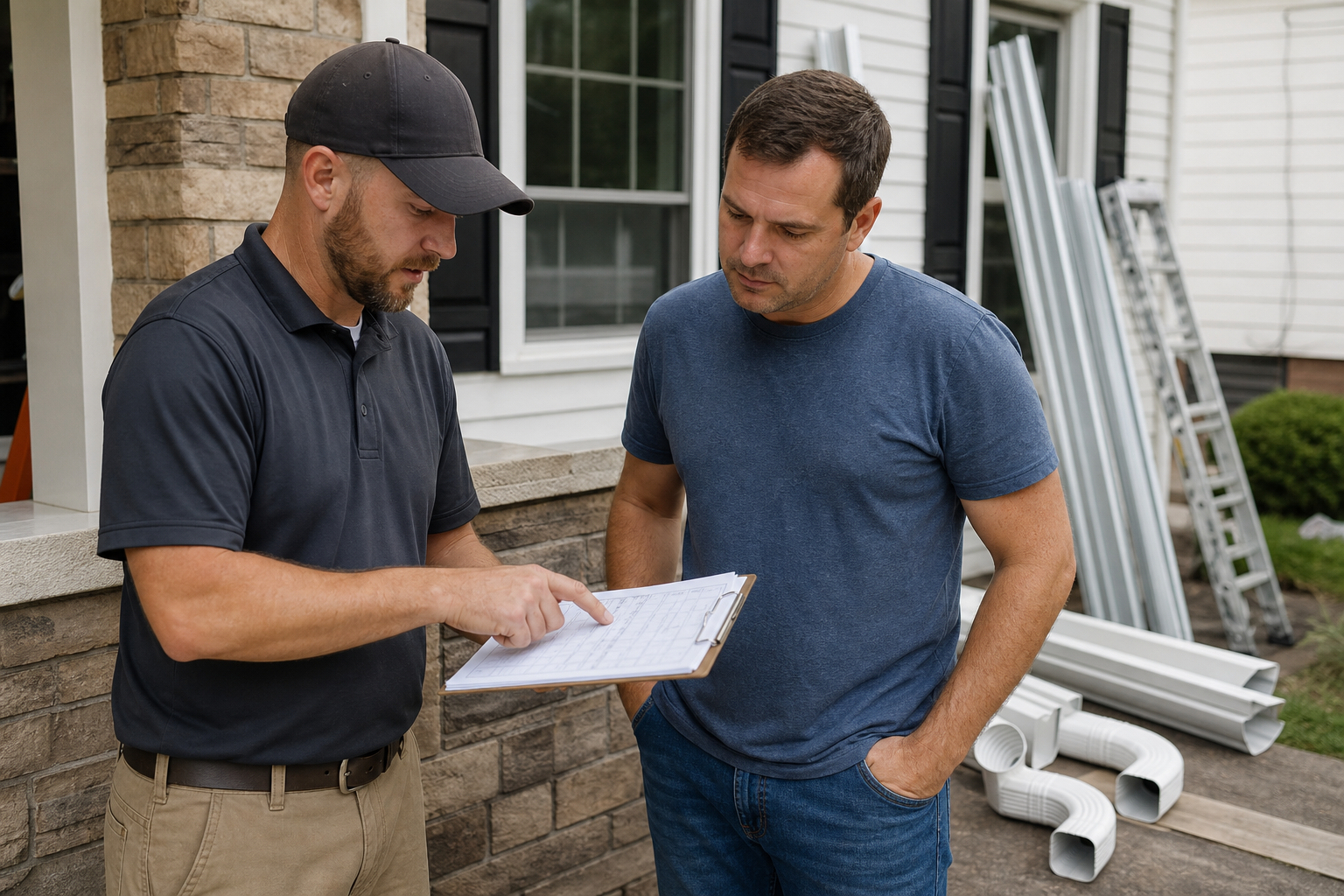
A legitimate gutter installation contractor doesn’t quote from a satellite image alone. They walk the roofline, measure every run, note the fascia condition, check downspout locations, and calculate drainage requirements based on your roof’s pitch and square footage. During this visit, ask about fascia board condition.
If it’s soft or rotted, it needs to be repaired before new gutters go up. Installing over damaged wood guarantees problems within a year. A good contractor flags this upfront, and any quote that doesn’t address fascia condition should prompt follow-up questions.
Installation Timeline and Disruption to Your Home
Most residential gutter seamless installation projects take four to eight hours for a standard home, depending on linear footage, stories, and complexity. The fabrication truck arrives on-site, custom-cuts each run, and the crew installs directly. You don’t need to be home for most of the work, but being available at the start helps.
The installer can walk through the plan, confirm downspout placements, and address any questions about the site assessment findings.
Pricing and Budget Planning for Gutter Installation
Cost Factors That Affect Your Final Quote
Gutter Installation pricing depends on several variables working together. The most common cost drivers are:
| Cost Factor | What It Affects |
|---|---|
| Linear footage | Directly scales material and labor cost |
| Material type | Aluminum is standard; copper adds significant cost |
| Number of stories | Two-story work requires more setup and safety time |
| Downspout count | More downspouts increase drainage quality and cost |
| Fascia repair needed | Pre-installation repairs add to total project cost |
| Gutter guard add-on | Micromesh guard systems add per-linear-foot cost |
For a detailed breakdown of what homeowners in this region pay, the average cost of gutter installation page covers typical ranges with and without guard systems.
Finding Value Without Sacrificing Quality
Getting two to three itemized quotes is the standard recommendation for any gutter project. Compare line by line: what gauge aluminum, what hanger spacing, how many downspouts, and whether cleanup is included. The lowest bid isn’t automatically the best value.
A quote that skips proper hanger density or uses thinner-gauge material saves money initially but adds Gutter Repair and replacement costs later. Ask each contractor what their quote specifically includes before making a side-by-side comparison.
Choosing Your Gutter Installation Provider: Action Steps
Questions to Ask Before Hiring
Before you commit to any gutter installation contractor near me, run through this checklist:
- Are you licensed and insured in New York State? (Request certificates.)
- What gauge aluminum do you use, and how far apart are hangers spaced?
- Do you fabricate seamless gutters on-site or bring pre-cut sections?
- What warranty do you offer on workmanship?
- Can you provide references from recent jobs in this area?
- What happens if my fascia needs repair before installation?
The answers tell you quickly whether you’re talking to a professional or someone cutting corners.
Next Steps After Installation and Ongoing Maintenance
Once your new gutters are up, the most important thing you can do is protect the investment. Schedule your first Gutter Cleaning in the fall after leaves have finished dropping, and again in early spring to clear debris that accumulated over winter. Gutter Guards, particularly Micromesh Gutter Guards, are worth adding during or after installation to reduce that maintenance cycle significantly. They keep out the debris that causes clogs and overflows while allowing rainwater to pass through cleanly.
You can explore options on the micromesh gutter guards installation page. For homes in the Capital Region, knowing when to repair, clean, add guards, or replace your seamless gutters is worth understanding before the next major weather season.
Frequently Asked Questions
How long do seamless gutters typically last?
Aluminum seamless gutters last 20 to 30 years with proper installation and routine maintenance. Copper can last 50 years or more. The biggest factors affecting lifespan are installation quality, how well the gutters are secured to the fascia, and whether they’re cleaned regularly to prevent debris buildup and standing water.
What size gutters do I need for my home?
Most residential homes in the Capital Region use 5-inch or 6-inch K-style gutters. The right size depends on your roof’s square footage and pitch. Homes with steeper roofs or larger drainage areas typically need 6-inch gutters and wider downspouts to handle peak rainfall volume without overflowing.
Do I need a permit to install gutters in New York?
In most New York municipalities, Gutter Installation does not require a building permit because it is considered routine maintenance rather than structural work. That said, requirements vary by county and town, so confirm with your local building department if you’re unsure. A reputable local contractor will know the rules for Saratoga Springs and the surrounding Capital Region.
How do I know if my gutters need replacement rather than repair?
If your gutters are pulling away from the fascia in multiple spots, have visible rust or cracks along the channel, or overflow consistently despite being clean, Gutter Replacement is likely more cost-effective than continued repairs. You can review the key indicators in detail on the gutter replacements page for Capital Region homeowners.
What is the best time of year to install gutters?
Late spring through early fall is generally the most practical window for new gutter seamless installation in the Capital Region. Mild temperatures make on-site fabrication easier and give sealants at corners and downspout connections time to cure properly before the first hard freeze. That said, experienced contractors can complete installations in cooler weather when necessary.
Are gutter guards worth the added cost?
For most homeowners in the Capital Region, Micromesh Gutter Guards are a worthwhile investment. They significantly reduce how often gutters need cleaning, prevent blockages from pine needles and maple seeds, and extend the system’s useful life. The upfront cost varies by linear footage and guard type, but the reduction in annual maintenance often offsets it over three to five years.
Explore your options on the micromesh gutter guards installation page to understand what’s available for your home.
How many downspouts does my home need?
A common guideline is one downspout per 20 to 40 linear feet of gutter, but the right number also depends on your roof’s square footage, pitch, and how much rainfall your area receives. Undersized drainage is one of the most common causes of overflow and standing water in gutters. Your installer should calculate this during the estimate, not guess.
A properly planned gutter system protects everything from your roofline to your foundation. If you’re ready to get a clear picture of what your home needs, contact Urban Seamless Gutters for a professional assessment and free estimate. We serve homeowners across Albany, Saratoga Springs, Schenectady, and the surrounding Capital Region with quality gutter seamless installation backed by honest pricing and real workmanship guarantees.