



Key Takeaways
- Fascia boards carry your gutters and protect the edges of your roof decking from water intrusion.
- Clogged gutters cause water to overflow directly against fascia wood, making fascia board rot one of the most common and preventable forms of home water damage.
- Left untreated, rotten fascia leads to structural damage, pest infestation, and repair costs that multiply quickly.
- Gutter guards reduce overflow, keep debris out, and dramatically lower moisture exposure against the fascia.
- Catching the problem early through regular inspection makes the difference between a simple board replacement and a major structural repair.
What Fascia Does and Why It Fails
The Hidden Role of Fascia in Your Home’s Defense
The fascia board is the long, flat board that runs along the lower edge of your roofline, right where your gutters are attached. It does more than just hold the gutter in place. Fascia boards seal the gap between the roof edge and the exterior wall, block moisture from reaching the roof decking, and give your roofline a finished, clean look.
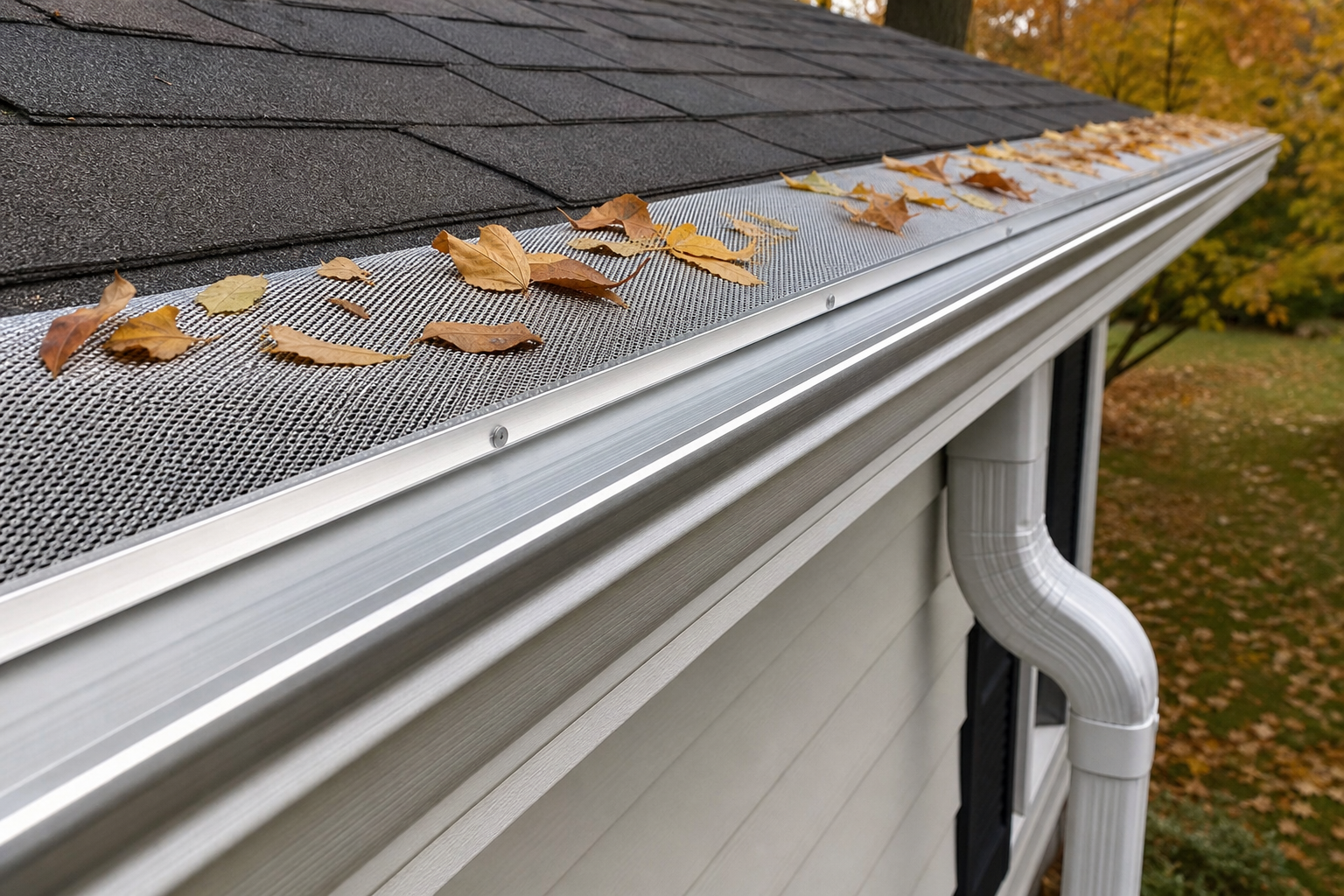
Because gutters mount directly to fascia, the fascia bears constant weight and daily exposure to the elements. When gutters function properly, water flows away quickly and the fascia stays dry. When they don’t, the fascia is the first casualty.
How Water Damage Leads to Fascia Rot
Wood rot is caused by fungi that thrive in persistently wet conditions. When gutters overflow, water runs behind the gutter lip and soaks into the fascia wood repeatedly. Over months and years, that moisture cycle softens the wood fibers from the inside out.
By the time you see soft, discolored wood or peeling paint on the outside, the rot has usually already progressed deeper than it looks.
In upstate New York, freeze-thaw cycles make this worse. Water that soaks into slightly damaged fascia expands when it freezes, forcing cracks wider and accelerating the decay. One wet autumn can do more damage here than two mild winters.
Why Standard Gutters Leave Fascia Vulnerable
A standard open gutter does its job when it’s clean. The problem is that leaves, pine needles, seed pods, and shingle grit accumulate faster than most homeowners realize. According to Gutterglove’s research on how clogged gutters cause water damage, clogged gutters are a leading cause of water intrusion along the roofline.
Once the channel clogs, overflow becomes the default behavior rather than the exception.
Most homeowners in Albany clean their gutters once a year at best, often in the fall. But spring debris from budding trees and summer thunderstorm grit can block gutters long before October. That leaves fascia boards sitting wet through multiple seasons.
The Real Cost of Ignoring Rotten Fascia
Structural Damage and Safety Risks
When fascia rot is left untreated, it compromises the gutter’s mounting point and can allow moisture to reach roof decking, rafters, and the interior ceiling, turning a simple board replacement into a full structural repair.
A rotted fascia board can no longer securely hold gutter hardware. Gutters start to pull away from the house, sag, or detach entirely during heavy rain, exactly when you need them most. Beyond the gutter itself, if water penetrates far enough, you risk damage to rafters, soffit panels, and the roof decking above.
Once rot reaches structural lumber, repair costs jump significantly.
Pest Infestation and Secondary Problems
Soft, wet wood draws carpenter ants, termites, and wood-boring beetles. These insects don’t stop at the fascia. They use the rotted material as an entry point to deeper structural wood in your roof and wall framing.
A gutter problem that seemed cosmetic can turn into a pest problem that requires both an exterminator and a contractor.
As noted in this analysis of rot and damage caused by poor gutter protection, pest infestations tied to gutter overflow damage are more common than most homeowners expect. Once moisture sits against wood long enough, the biology takes over quickly.
Repair Costs That Compound Over Time
Replacing a single rotten fascia board might cost a few hundred dollars when caught early. Wait until the soffit, roof decking, or framing is involved and that number can climb to several times that amount. Add pest remediation, repainting, and potential gutter reinstallation and the original problem compounds into a major project.
The math is simple: prevention through gutter guard installation costs far less than the repair bill that follows years of ignoring the warning signs.
How Gutter Guards Prevent Fascia Rot
Keeping Debris Out and Water Flowing
Gutter guards work by covering the gutter channel so leaves, twigs, and debris stay out while rainwater flows through. When the channel stays clear, water drains at the rate it’s designed to handle. There’s no overflow collecting against the fascia, no standing water inside the gutter, and no debris piles trapping moisture against the board.
For homes surrounded by mature trees, common in neighborhoods like Delmar, Loudonville, or the areas around Saratoga Lake, this protection is especially meaningful. The volume of debris those trees drop in fall and spring would overwhelm an unguarded gutter within weeks.
Reducing Moisture and Mold Growth
Clogged gutters hold standing water and decomposing debris for days or weeks. That combination creates a humid environment that transfers moisture to everything it touches, including the fascia directly behind the gutter. Guards eliminate the debris layer that traps humidity and feeds mold growth along the roofline.
You can learn more about how this protection works in our step-by-step gutter guard installation guide for Capital Region homeowners, which walks through exactly how guards mount and what they do season by season.
Gutter Guard Options and Their Fascia Protection
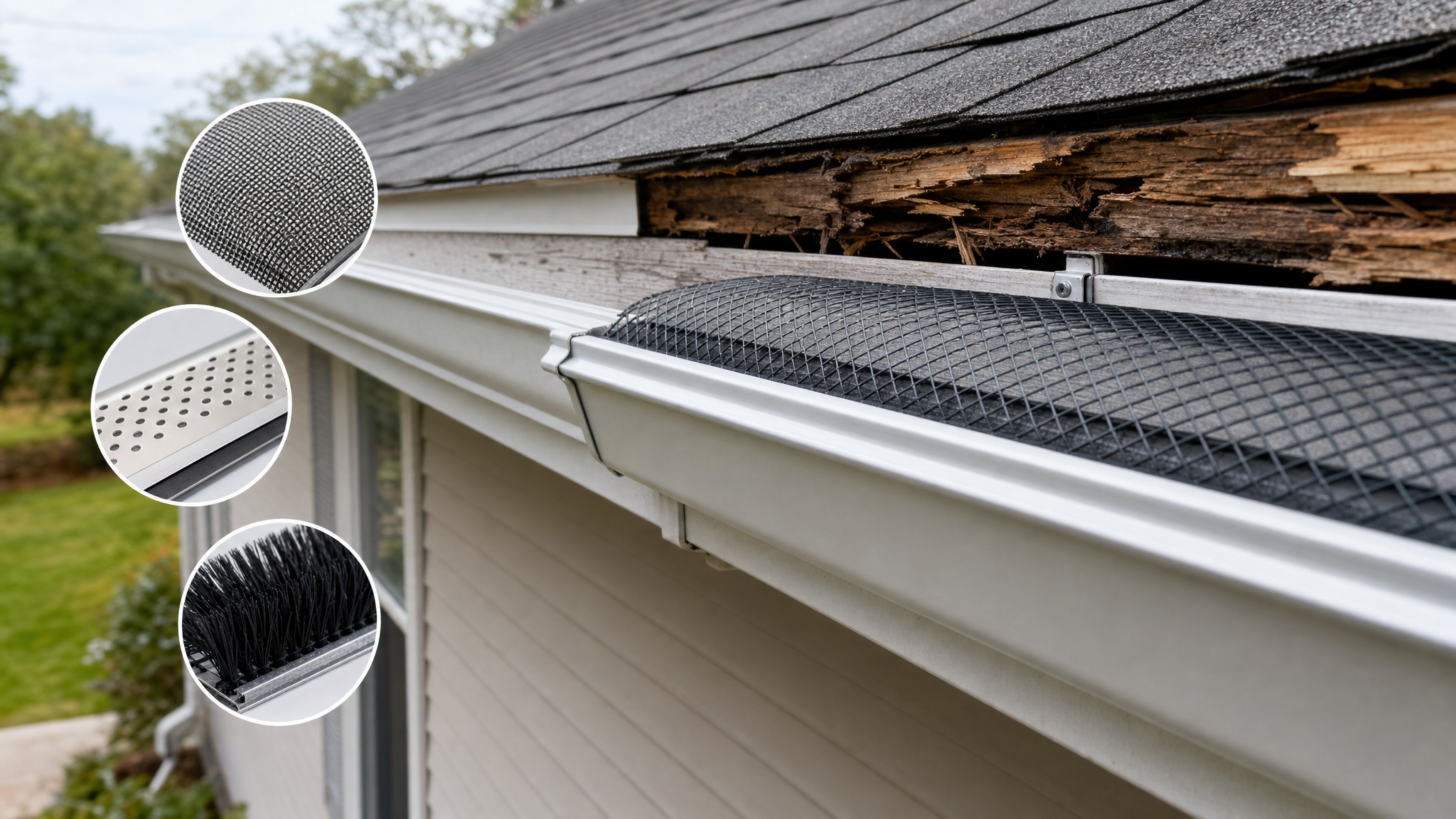
Mesh and Screen Systems
Mesh and micromesh guards are among the most effective options for keeping gutters clean. Micromesh in particular uses a finely woven metal screen that allows water through while blocking even small debris like pine needles and shingle granules. Because the gutter channel stays clear, water never backs up against the fascia.
| Guard Type | Debris Blocked | Water Handling | Fascia Protection Level |
|---|---|---|---|
| Micromesh | Fine debris, needles, granules | Excellent | High |
| Standard mesh/screen | Leaves, twigs | Good | Moderate-High |
| Solid cover/reverse curve | Large leaves | Good in moderate rain | Moderate |
| Foam insert | Leaves (surface) | Poor in heavy rain | Low |
| Brush insert | Leaves (surface) | Poor in heavy rain | Low |
Micromesh guards tend to be the best long-term investment for homes in the Capital Region, where both heavy leaf fall and pine needle debris are seasonal realities.
Solid Cover and Reverse Curve Guards
Solid cover and reverse curve guards use surface tension to guide water into the gutter while debris falls off the edge. They work well for large leaves but can struggle with fine debris like shingle grit, which builds up along the curve over time. They also require precise installation so the water channel functions correctly.
For most Capital Region homes, micromesh gutter guards outperform solid cover systems across a wider range of debris types and seasonal conditions. Our gutter guards service page covers what we install and why we recommend what we do.
Signs Your Fascia Is at Risk or Already Rotting
Visual Red Flags to Inspect Now
You don’t need to climb on the roof to check for early signs of fascia trouble. Walk your property after a heavy rain and look for:
- Gutters pulling away from the house or visibly sagging
- Water dripping behind the gutter rather than through the downspout
- Peeling or bubbling paint along the roofline
- Dark streaks or staining running down the siding below the gutter line
- Any section of fascia that looks darker, softer, or slightly caved compared to the rest
If you spot any of these, the fascia board rot process may already be underway. Early action limits the damage significantly.
Water Stains, Sagging, and Soft Wood
Soft wood is the clearest indicator of active rot. Press firmly against the fascia with your thumb or a screwdriver handle at a few spots along the roofline. If the wood gives noticeably, it’s compromised.
Sagging gutters are often a direct result of fascia that can no longer hold the mounting hardware.
Water stains on your soffit panels below the fascia are another red flag. That staining means water has been traveling past the fascia and pooling in places it shouldn’t reach. At that point, gutter repair or replacement should happen alongside any fascia work so the same problem doesn’t repeat.
Protecting Your Fascia: Action Steps for 2026
Assess Your Current Gutter System
Start with an honest look at what you’re working with. When did your gutters last get cleaned? Are they holding their shape and pitch, or do sections sag between hangers?
Do downspouts drain completely, or do you find standing water in the channel the day after a storm?
Use this quick checklist to assess your situation:
- [ ] Gutters cleaned within the last 12 months
- [ ] No visible sagging or separation from fascia
- [ ] Downspouts discharge freely with no backup
- [ ] No water stains on soffit or siding below gutters
- [ ] Fascia paint intact with no soft or discolored sections
- [ ] No pest activity observed near the roofline
Choose the Right Guard and Installation Approach

Once you know where your gutters stand, the next step is deciding what level of protection makes sense. For most Albany and Capital Region homes, micromesh guards installed by a professional are the most reliable path. They handle the full range of debris the region throws at your gutters, from autumn maple leaves to spring pollen and pine needles, without requiring frequent maintenance.
A few things to confirm before installation:
- Gutters should be clean and in good structural shape before guards go on. Installing guards over a clogged or damaged gutter just locks the problem in.
- Make sure your downspouts are properly sized and clear. Guards improve flow into the gutter, but the water still needs somewhere to go.
- Choose a guard system matched to your tree coverage. Heavy canopy means you need finer filtration.
If you are unsure whether your gutters need repair, replacement, or just guards, our when to repair, clean, add guards, or replace your gutters guide walks through each scenario so you can make the right call without guesswork.
Frequently Asked Questions
What does rotten fascia look like?
Rotten fascia typically shows up as darkened or discolored wood, soft spots that give under light pressure, bubbling or peeling paint along the roofline, and gutters that appear to be pulling away or sagging. In more advanced cases, you may see visible crumbling or splintering at the surface. If you press on a section and it feels spongy rather than firm, rot is likely already present beneath the paint layer.
Can I replace a rotten fascia board myself?
Replacing a single rotten fascia board is a manageable DIY project for a confident homeowner with basic carpentry skills and safe ladder access. The board needs to be removed cleanly, the area behind it inspected for moisture damage or mold, and the new board primed and painted before installation. That said, if multiple boards are affected, or if the soffit or roof decking behind the fascia shows damage, bringing in a contractor is the safer and more cost-effective choice.
How do gutter guards prevent fascia rot specifically?
Gutter guards work by blocking debris from entering the gutter channel, which means water flows through freely instead of overflowing against the fascia. When gutters overflow, water runs directly behind the gutter lip and saturates the fascia wood repeatedly. Guards eliminate that overflow scenario.
Reduced debris also means less standing water and decomposing organic matter sitting inside the gutter, both of which contribute to the moisture that drives fascia rot.
How often should I inspect my fascia?
A visual fascia inspection twice a year is a reasonable baseline for most homes: once in late spring after pollen and seed debris season, and once in early winter after leaves have fallen. If your home is surrounded by mature trees or sits in a shaded area that stays damp, inspect more frequently. Pay close attention to any section of fascia directly above a downspout or at a valley point in your roofline, where water concentrates most.
What type of gutter guard works best for Capital Region homes?
Micromesh gutter guards are widely considered the most effective option for homes in upstate New York. The fine mesh filters out pine needles, shingle granules, and small seed debris that coarser screens miss. They handle the volume of debris that falls during a typical Capital Region autumn while standing up to freeze-thaw conditions better than foam or brush inserts.
Our gutter guard installation guide for Capital Region homeowners explains what the installation process looks like and what to expect.
Is fascia rot covered by homeowner’s insurance?
Most standard homeowner’s insurance policies treat fascia rot as a maintenance issue rather than a sudden or accidental loss, which means it is typically not covered. Insurers generally expect homeowners to maintain their gutters and roofline. If fascia rot leads to interior water damage and you can demonstrate that the damage was sudden rather than gradual, there may be grounds for a partial claim, but this varies by policy.
The safest position is to address the problem before it reaches that point.
How much does it cost to fix rotten fascia?
Costs vary depending on how many boards are affected and whether the soffit or roof structure behind the fascia also needs attention. Replacing a single board on a single-story home is typically an affordable repair. If multiple sections are rotted or the damage has spread to adjacent materials, costs rise accordingly.
Preventing the problem with properly maintained gutters and gutter guards is consistently the less expensive path compared to reactive repairs. For a sense of full gutter system costs, the average cost of gutter installation guide provides useful context.
 Ready for a free quote? Share a few details with Urban Seamless Gutters, we’ll help you choose the right next step. Get a Free Quote |