



Key Takeaways
- Sectional gutters fail most often at their seams and joints, which are the weakest points in the system.
- Seamless gutters are custom-cut from a single piece of material on-site, eliminating interior joints almost entirely.
- Fewer joints mean dramatically lower leak rates, less maintenance, and longer system lifespan.
- Aluminum seamless gutters are the most popular and cost-effective choice for most Capital Region homes.
- A professional assessment can confirm whether your current gutters need repair, cleaning, or full replacement.
The Leak Problem: Why Sectional Gutters Fail
Sectional gutters are sold in pre-cut lengths, typically 10 to 12 feet, that are connected on-site with brackets and sealant. The connectors look sturdy on day one. But every joint is a liability that gets harder to defend over time.
How Seams and Joints Become Failure Points
Sealant between sections is designed to flex slightly, but it degrades with UV exposure, heat cycling, and freeze-thaw stress. In Albany’s climate, where temperatures can swing from -10°F in January to 90°F in July, that sealant cracks, shrinks, and eventually separates. Water finds every gap.
Once a seam opens, it does not self-heal. The gap collects debris, holds moisture, and expands with every freeze. A single compromised joint can dump water directly onto your fascia board, soffit, and eventually your foundation.
Water Penetration and Foundation Damage Risk
This risk compounds in the Capital Region. Homes in Albany, Clifton Park, and Schenectady often sit on clay-heavy soils that expand when saturated, increasing basement seepage risk significantly. A failing seam does not just cost you a gutter repair, it can cost you a waterproofed basement.
Seasonal Stress on Sectional Systems
Ice dams are another serious threat. When gutters overflow at the seams, ice builds up along the roofline and forces water back under shingles. Each winter freeze-thaw cycle widens existing gaps.
By spring, joints that barely held last fall are visibly separated. This cycle repeats until the system fails completely.
How Seamless Gutters Eliminate Leaks at the Source
Seamless gutters are fabricated in one continuous piece custom-fit to each run of your roofline, removing the interior joints where the vast majority of gutter leaks begin.
The solution is not better sealant. It is eliminating the seams entirely.
Single-Piece Construction and Continuous Flow
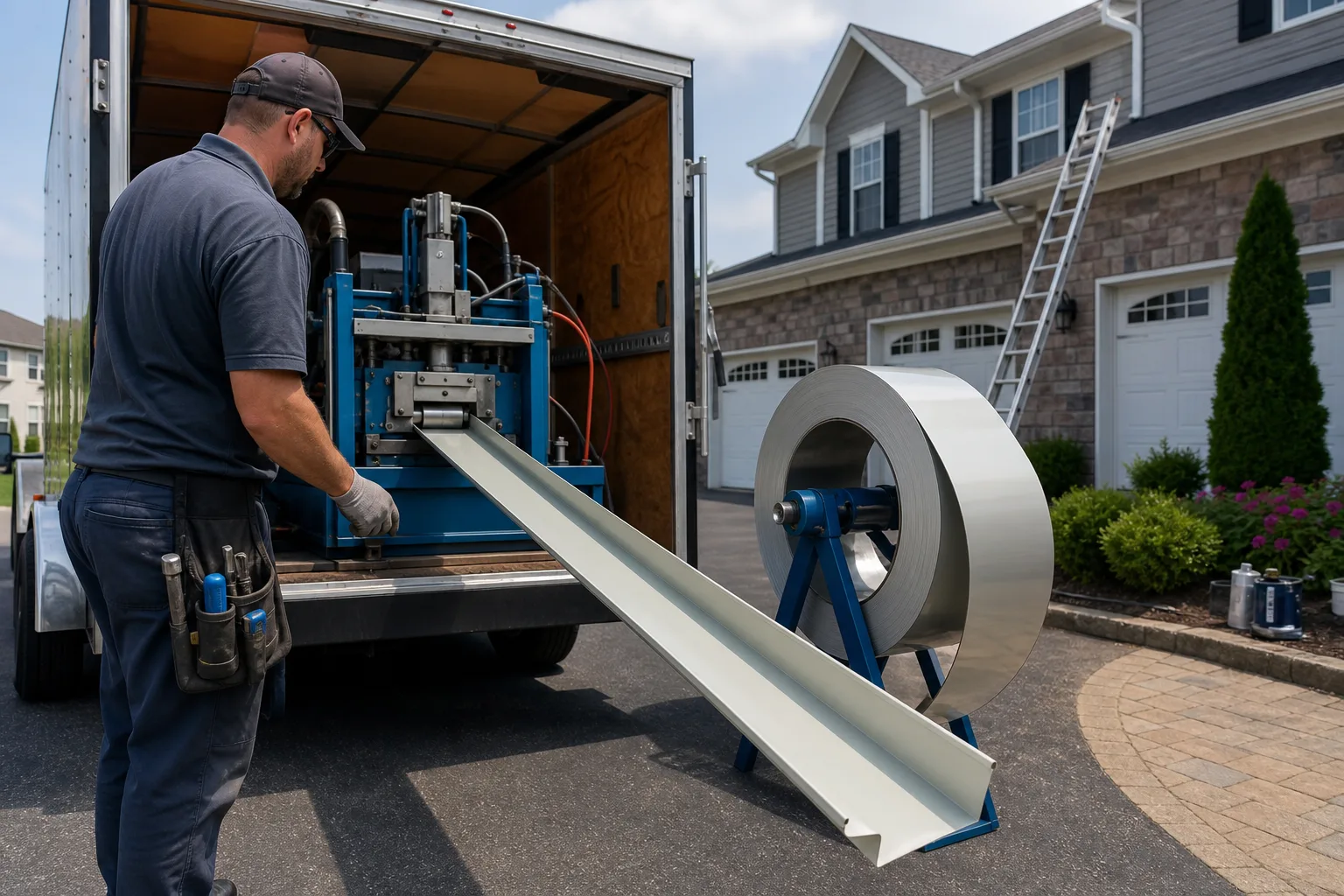
A seamless gutter system is fabricated on-site using a portable roll-forming machine that extrudes a single continuous channel from a coil of aluminum (or steel or copper). The gutter is cut to the exact length of each roofline run. There are no mid-span joints.
The only connection points are the corners and downspout outlets, which are sealed and fitted by the installer.
This design change is why Englert, a manufacturer of seamless gutter systems, consistently points to fewer leaks as the primary benefit of seamless construction. Fewer joints mean fewer points where water can escape.
Precision Sizing and Professional Installation
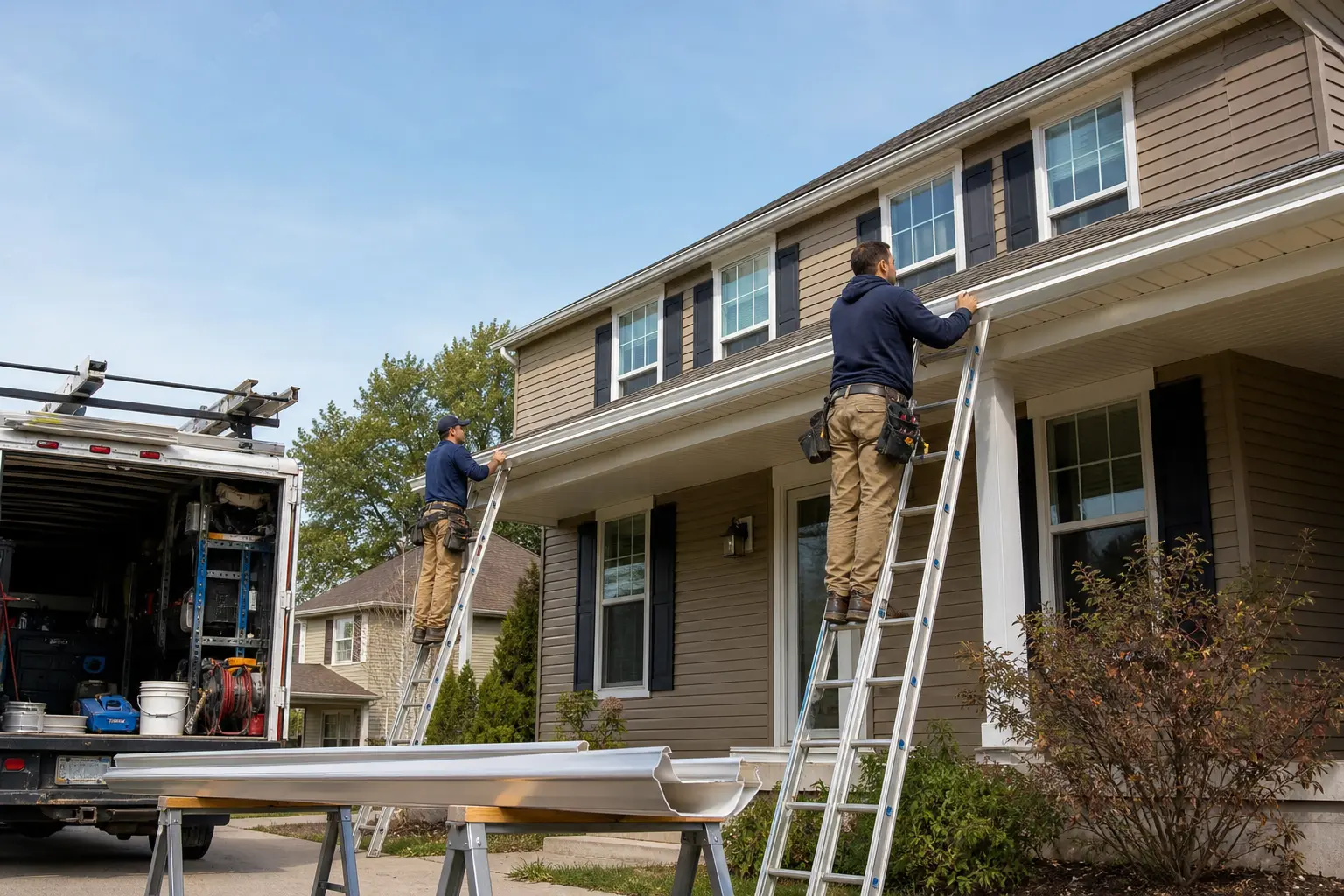
Because the gutter is cut to exact dimensions on-site, it fits the fascia line without the slight misalignments that accumulate when multiple 10-foot sections are joined together. Proper pitch, typically 1/4 inch of slope per 10 feet of run, is set during installation to ensure water moves efficiently toward the downspout rather than pooling.
You can explore the full process in this step-by-step seamless gutter installation guide for Capital Region homeowners to understand what a professional installation actually involves.
Durability Through Environmental Stress
Without seams to crack, seamless gutters respond to thermal expansion and contraction as a single unit rather than as a chain of linked sections pulling against each other. This unified behavior reduces stress concentration at any single point and extends the system’s usable life considerably, especially through upstate New York winters.
Seamless vs. Sectional: Key Performance Differences
Leak Rate and Material Comparison
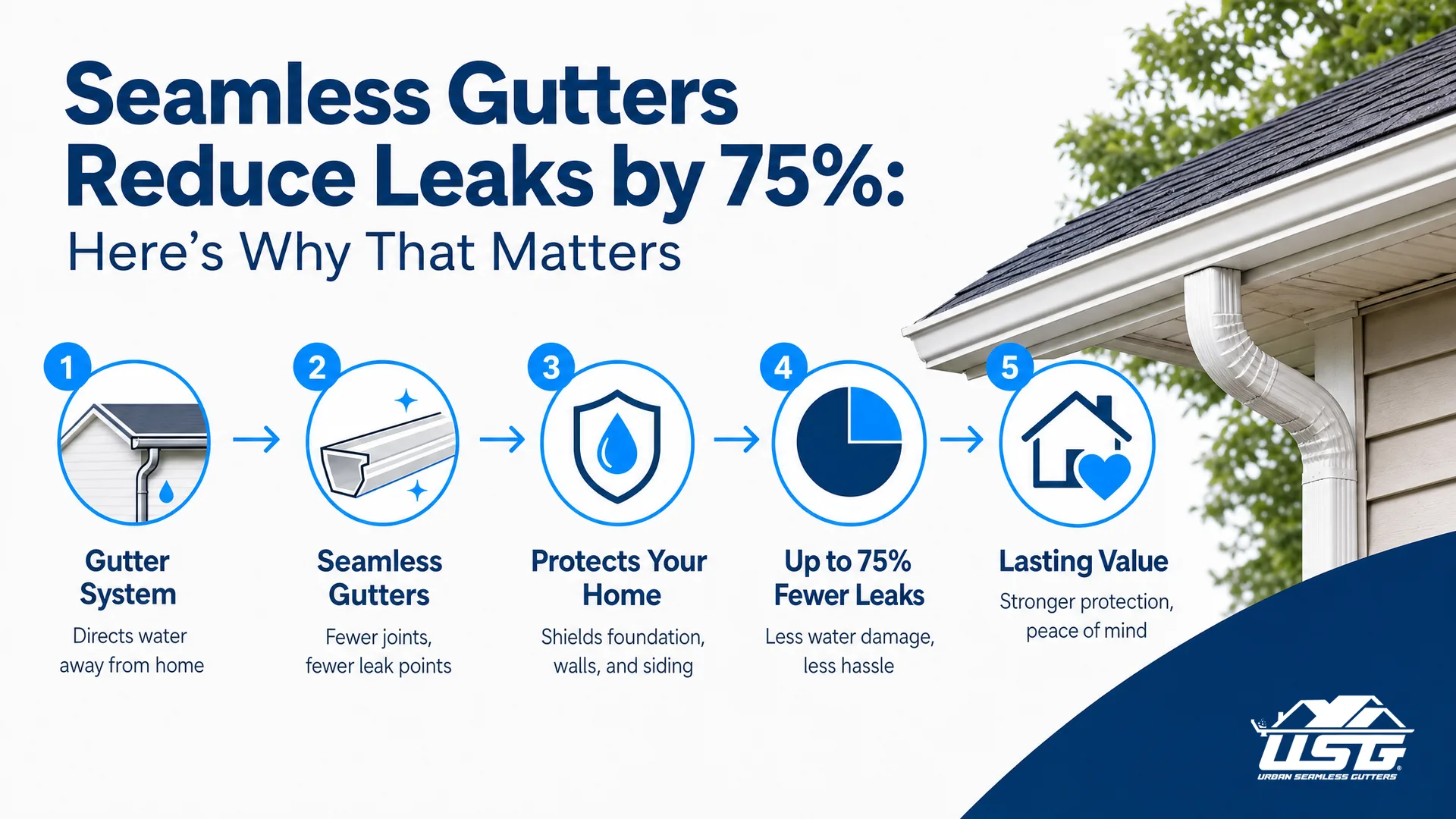
The core performance gap between these two systems comes down to joint count. A 150-foot sectional gutter system might have 12 to 15 seams, each a potential leak point. A seamless system on the same home has zero interior seams.
| Feature | Seamless Gutters | Sectional Gutters |
|---|---|---|
| Interior joints | None (end caps and corners only) | Every 10-12 ft of run |
| Leak risk | Very low | Moderate to high over time |
| Custom fit | Yes, cut on-site | No, pre-cut lengths only |
| Common materials | Aluminum, steel, copper | Aluminum, vinyl, steel |
| Typical lifespan | 20-30 years (aluminum) | 10-20 years |
| Maintenance frequency | Lower | Higher |
Vinyl sectional gutters, popular for DIY installs, are especially prone to cracking in cold climates. Aluminum and steel hold up better, but even well-made sectional aluminum systems still rely on sealant at every joint. According to Window World’s comparison of seamless vs. sectional gutters, seamless systems are generally considered the superior choice for longevity and performance.
Installation Time and Labor Costs
Seamless gutters require professional installation because the roll-forming equipment is not a consumer tool. That means a slightly higher upfront cost compared to DIY sectional systems. But the labor difference narrows quickly when you factor in the ongoing cost of resealing joints, which sectional systems need every few years.
For a clearer picture of what installation runs in this area, see the average cost of gutter installation breakdown for Capital Region homes.
Lifespan and Maintenance Requirements
A properly installed aluminum seamless gutter system typically lasts 20 to 30 years. Sectional systems, depending on material and climate exposure, often need replacement in 10 to 20 years, sometimes sooner if sealant maintenance is neglected. The math favors seamless gutters even when the upfront cost is higher.
Real-World Impact: What the 75% Difference Means for Homeowners
Water Damage Prevention and Insurance Implications
When gutters fail, the damage rarely stays local. Water running down your foundation walls, pooling near your sill plate, or overflowing behind your fascia board creates conditions for rot, mold, and structural damage that can run into thousands of dollars. Some homeowners discover the damage only when they see staining on interior walls or smell mildew in the basement.
Insurance policies cover sudden water damage in most cases, but gradual water intrusion caused by neglected gutters is often excluded. Keeping your gutter system functional and leak-free is one of the simplest ways to stay within your policy’s coverage terms.
Long-Term Cost Savings Beyond the Initial Investment
Think of seamless gutters as a one-time structural upgrade rather than a maintenance product. You pay more upfront, but you stop paying for seam repairs, temporary patches, and the kind of cascading water damage that sectional systems let through. Knowing when to repair, clean, add guards, or replace your gutters can help you make the right call at each stage of your gutter’s life.
Choosing the Right Seamless Gutter System for Your Home
Material Options: Aluminum, Steel, and Copper
Aluminum is the most common choice for Capital Region homes. It is lightweight, corrosion-resistant, and available in a wide range of colors to match your trim. Standard gauge for residential use is .032 to .040 inches, with thicker gauges offering better dent resistance.
| Material | Typical Lifespan | Corrosion Resistance | Relative Cost |
|---|---|---|---|
| Aluminum | 20-30 years | Excellent | Moderate |
| Steel (galvanized) | 15-25 years | Good | Moderate |
| Copper | 50+ years | Excellent | High |
Steel gutters are heavier and suitable for homes in areas with significant snow load or physical debris impact. Copper is a premium option that develops a natural patina and can last 50 years or more, making it a strong choice for historic homes in Albany’s older neighborhoods.
Professional Installation Standards and Warranties
A reputable installer will use hidden hanger systems spaced no more than 24 inches apart, properly pitch each run, and seal all end caps and corners with professional-grade sealant. Ask about material warranties (typically 20 years from the manufacturer) and workmanship warranties from the contractor.
For homeowners weighing their options, our expert gutter installation services page covers what to look for in a Capital Region gutter contractor.
Next Steps: Getting a Seamless Gutter Assessment
What to Expect During a Professional Inspection
A thorough inspection looks at pitch and slope, hanger spacing, fascia board condition, sealant coverage at joints, and the condition of downspouts and elbows. You do not need to climb a ladder yourself. A trained installer can spot failing seams, improper pitch, and fascia damage from the ground and with a quick hands-on check along the gutter run.
Most inspections take 30 to 60 minutes for a standard single-family home. The inspector will note which sections are salvageable, which need resealing, and whether a full replacement makes more financial sense than repeated repairs.
Estimating Replacement Costs and Timeline
For most Capital Region homes, a full seamless gutter replacement on a single-family house takes one day or less. Crew size, linear footage, and material choice all affect the timeline, but most installs are complete before the end of the workday.
Cost depends on linear footage, material, and any fascia repairs needed before installation. Aluminum systems are the most budget-friendly entry point. Copper runs significantly higher but requires almost no long-term maintenance.
If you want a realistic number before committing, get a free quote from a local contractor who can measure your home on-site rather than estimating from square footage alone.
Frequently Asked Questions
Are seamless gutters really better than sectional gutters?
Yes, for most homeowners the difference is meaningful. The primary advantage is the elimination of interior seams, which are the most common source of gutter leaks. Sectional systems rely on sealant at every joint, and that sealant degrades over time, especially in climates with harsh winters like Albany’s. Seamless house gutters hold up longer, require less routine maintenance, and provide better protection for your fascia, siding, and foundation.
How long do seamless gutters last?
Aluminum seamless gutters typically last 20 to 30 years when properly installed and maintained. Steel systems fall in a similar range depending on coating quality, while copper gutters can last 50 years or more. Regular cleaning, at least once or twice a year in the Capital Region, extends the life of any system by preventing debris buildup that causes sagging and overflow.
Can I install seamless gutters myself?
No. Seamless gutters require a roll-forming machine that extrudes the gutter channel from a coil of metal on-site. This equipment is not available to consumers and requires trained operators to calibrate correctly.
The installation also involves precise pitch setting, hanger spacing, and sealing at corners and end caps. Attempting a DIY version with pre-cut sections defeats the purpose of the seamless design. You can learn more about what the professional process involves on the seamless gutter installation page.
What size seamless gutter do I need?
Most residential homes in the Capital Region use 5-inch K-style gutters, which handle typical roof runoff volumes efficiently. The right size depends on your roof’s square footage, pitch, and the intensity of rainfall your area receives. A professional installer will calculate the correct sizing during the estimate visit rather than defaulting to a one-size-fits-all approach.
Do seamless gutters still need cleaning?
Yes. While seamless gutters eliminate leaks at seams, they still collect leaves, pine needles, shingle grit, and other debris that blocks water flow. Clogged gutters overflow regardless of how well-constructed they are.
Most Capital Region homeowners need professional gutter cleaning at least once in the fall and once in the spring. Adding micromesh gutter guards after installation significantly reduces how often cleaning is needed.
What happens if I ignore failing sectional gutters?
Water that escapes through failed seams runs down your exterior walls, soaks the soil around your foundation, and accelerates rot in fascia boards and soffits. Over time this leads to basement moisture, mold growth, and structural wood damage that costs far more to fix than a gutter replacement. According to Legacy Gutters’ breakdown of why fewer joints mean fewer problems, the cumulative damage from unaddressed gutter leaks is one of the most preventable forms of home water damage.
How do I know if my gutters need to be replaced versus repaired?
Signs that point toward replacement include visible separation at multiple joints, gutters pulling away from the fascia at several points, rust streaks, sagging sections, and water staining on your siding or foundation. A single leaking seam or a loose hanger is typically repairable. When the problems are widespread or the system is more than 20 years old, replacement usually delivers better value than continued patching.
Our guide on when to repair, clean, or replace your gutters walks through the decision criteria in detail.
 Ready for a free quote? Share a few details with Urban Seamless Gutters, we’ll help you choose the right next step. Get a Free Quote |