



Key Takeaways
- The cleaning method you choose has a bigger impact on gutter lifespan than your cleaning schedule.
- Pressure washing can dislodge hangers, blow out miter sealant, and send debris into your downspouts at high velocity.
- Hand removal with quality tools is the safest DIY option for most aluminum gutters.
- Professional vacuum systems and soft-wash rigs contain debris and avoid surface damage entirely.
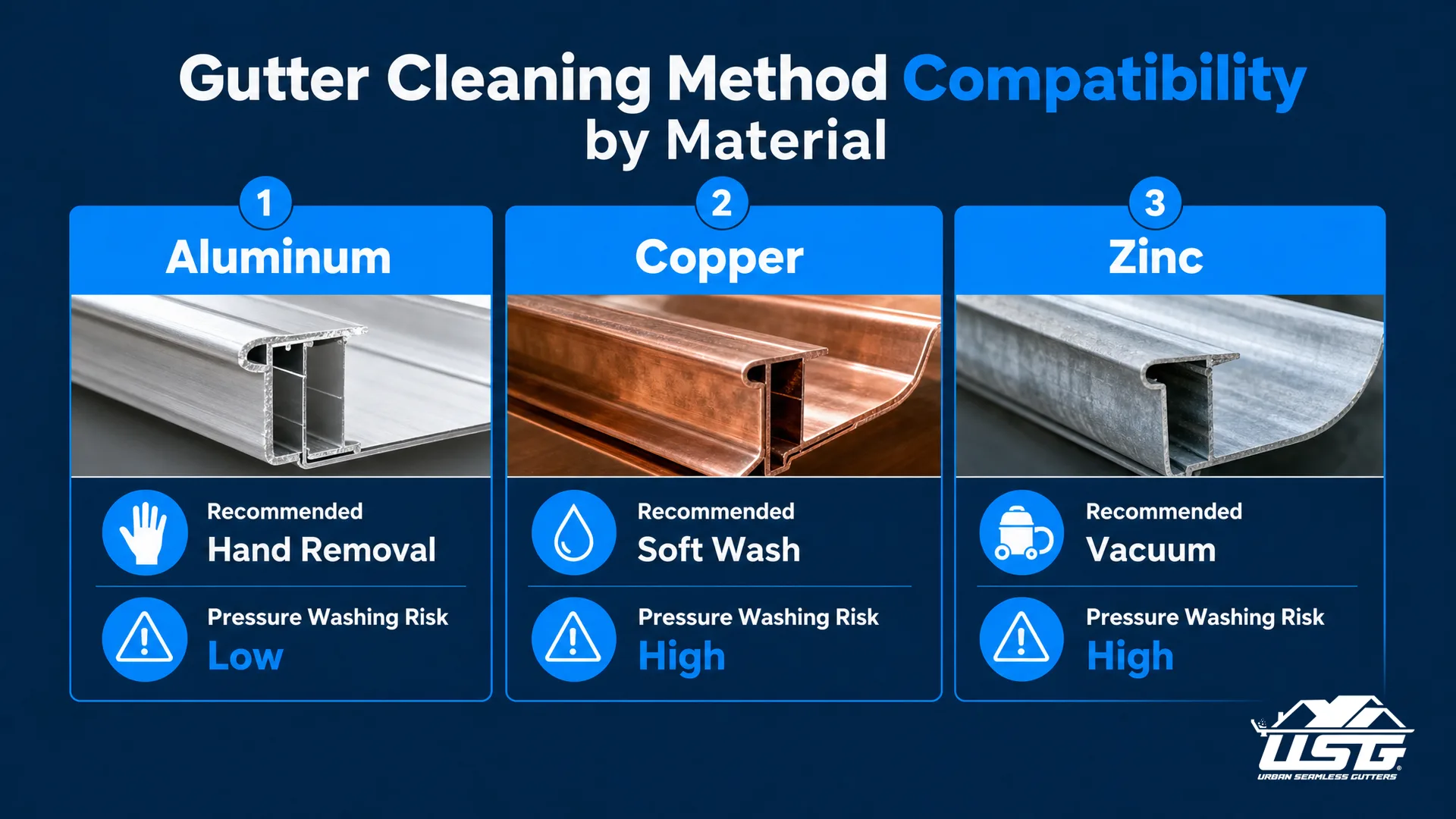
- Gutter material (aluminum, copper, zinc) should always guide your method choice.
This article is for homeowners who want to protect their investment, not just check a box. You’ll learn exactly how pressure washing, hand removal, and professional tools compare, what each one risks, and how to pick the right approach for your specific gutters.
How Gutter Cleaning Method Affects Long-Term Damage and Cost
The method you use to clean your gutters directly determines whether you extend gutter life or accelerate the damage that leads to fascia rot, foundation erosion, and early replacement.
Most homeowners focus on frequency: clean twice a year, and you’re covered. That’s a reasonable starting point, but it overlooks a critical variable. Two homeowners on the same street, both cleaning every fall and spring, can end up with completely different outcomes based on technique alone.
Why Method Choice Impacts Gutter Lifespan
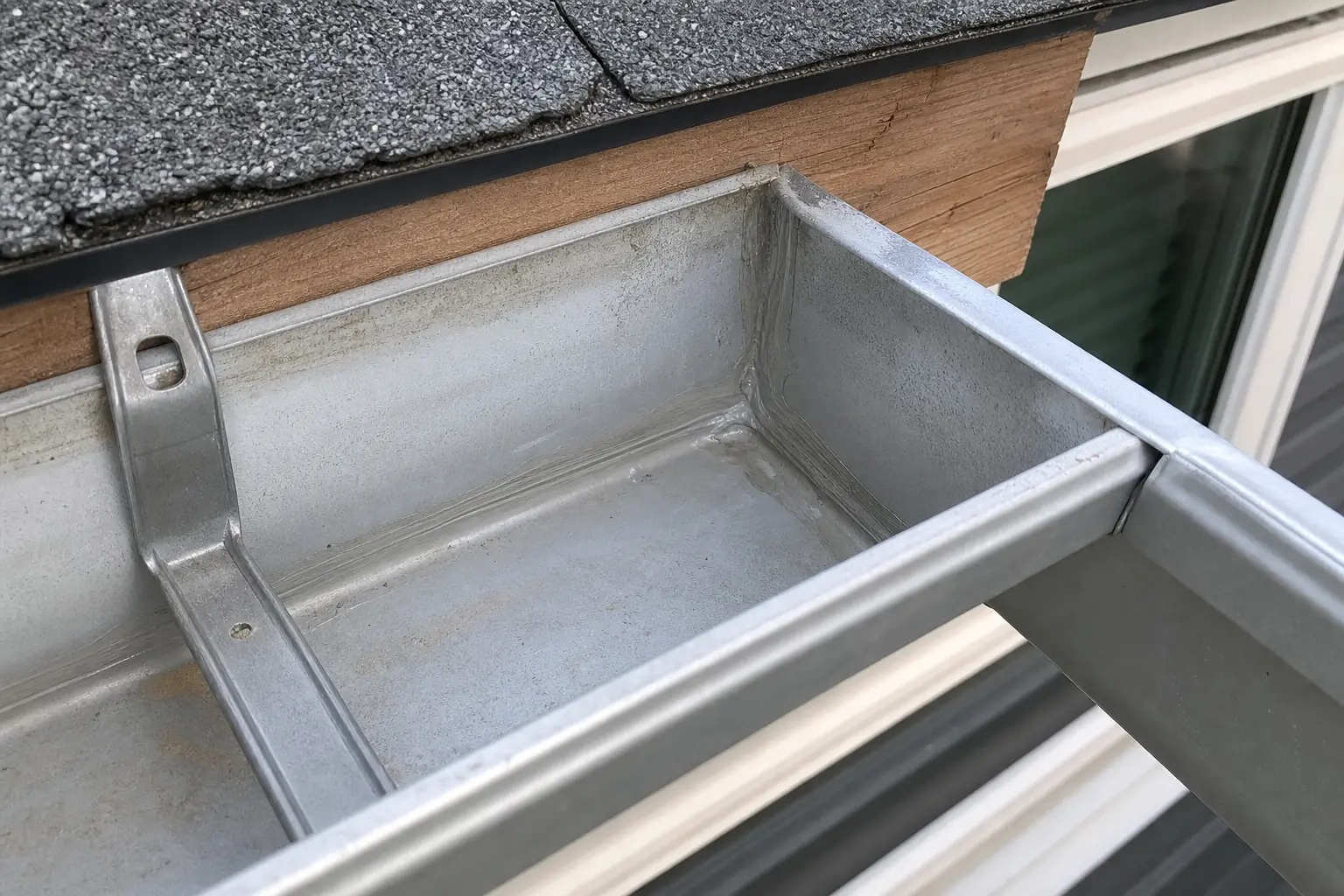
Gutters are attached to your fascia boards with hangers or spikes, and the joints between sections are sealed with flexible miter sealant. Both of those components are sensitive to pressure, heat, and mechanical stress. Rough cleaning methods put all three forces to work against the system holding your gutters in place.
A gutter that is cleaned gently and thoroughly each season can last 20 or more years. The same gutter cleaned aggressively with high-pressure water may develop leaking seams and loose hangers within five to seven years, requiring early gutter repair or full replacement.
Hidden Costs of Wrong Cleaning Techniques
Damage from poor technique rarely shows up immediately. You might pressure wash your gutters in October and not notice a problem until spring, when water is running behind the gutter channel and soaking into the fascia wood. By then, the repair cost is far higher than the cleaning ever was.
Siding staining, blown-out downspout elbows, and cracked gutter corners are all common aftereffects of aggressive pressure washing. According to Window Hero’s gutter cleaning resource, choosing the wrong tool for the job is one of the leading reasons homeowners end up with gutter damage that looks like age-related wear.
How Proper Method Prevents Fascia Board Rot and Foundation Issues
Clean gutters move water away from your roofline and foundation. But if your cleaning method forces water and debris into gaps along the fascia, you’re introducing moisture exactly where it causes the most structural harm. Rotted fascia means the anchor points for your gutters weaken over time, which leads to sagging, pulling away from the roofline, and eventually full replacement.
At the foundation level, water that overflows because downspouts are clogged with dislodged debris can saturate soil against your home’s perimeter, increasing the risk of basement seepage. Getting the method right protects your foundation just as much as it protects your gutters. You can learn more about the full decision process in our guide on when to repair, clean, add guards, or replace seamless gutters.
Pressure Washing Gutters: Benefits and Real Risks
Pressure washing moves debris fast but introduces risks that are easy to underestimate: loosened hangers, blown sealant, and debris forced deeper into downspouts.
Pressure washing gets attention because it looks effective. You can clear a full gutter run in minutes and the results look clean from the ground. The problem is what happens at seams, fasteners, and downspout inlets that you can’t see from a ladder.
When Pressure Washing Works Well
Pressure washing is most appropriate for the outside of your gutters, not the inside. Removing oxidation streaking, mildew stains, and algae from the exterior face of aluminum gutters is a legitimate use case, and a low-to-moderate PSI setting handles this safely. It’s also useful for flushing a gutter channel that has already been manually cleared of solid debris.
Pressure Washer Damage to Gutters, Seams, and Fasteners
Directing a pressure washer stream into a debris-filled gutter creates a projectile effect. Wet leaves, compacted dirt, and granules from roof shingles get pushed at high velocity directly toward the downspout inlet, where they compact into a dense clog. According to this honest breakdown from a Rockford gutter cleaning company, high-pressure water also loosens miter sealant on older gutters and can blow hangers loose when fascia wood is soft or weathered.
The spray pattern also drenches your siding, window frames, and landscaping with a mix of water and decomposed organic matter, creating new mildew problems on surfaces that had none before.
PSI Levels That Damage vs. Clean Safely
| Use Case | Safe PSI Range | Risk Level |
|---|---|---|
| Exterior stain removal (outside face) | 1,200, 1,500 PSI | Low |
| Flushing pre-cleared gutter channel | 1,000, 1,200 PSI | Low-Moderate |
| Debris removal inside loaded gutter | 1,500, 2,500+ PSI | High |
| Downspout flushing | 800, 1,000 PSI | Moderate |
Hand Removal and Manual Tools: The Traditional Approach
Hand removal is the standard most professional gutter cleaning technicians default to, and for good reason. It’s controlled, quiet, and puts eyes directly on the gutter surface to catch damage before it becomes a bigger problem.
Best Practices for Hand Cleaning Without Damage
Work from a stable ladder positioned to avoid leaning into the gutter channel. Move debris toward a bucket or tarp rather than pushing it toward the downspout. After clearing solid material, a low-pressure garden hose flush confirms flow and helps spot any slow drains or blockages.
Always work in sections. Attempting to reach too far from one ladder position is both a safety risk and a quality issue. You miss debris at the edges and risk destabilizing your ladder.
Tools That Work: Scoops, Brushes, and Vacuums
A plastic gutter scoop is the go-to tool for most debris types because it conforms to the gutter channel without scratching aluminum. Stiff-bristle gutter brushes handle compacted sediment and granule buildup that scoops leave behind. Wet/dry vacuum attachments with curved gutter nozzles let you work from the ladder without inserting your hands into debris, which is cleaner and faster on single-story homes.
Telescoping wand attachments extend your reach on single-story gutters, though ground-level operation sacrifices some visibility and control.
Safety Considerations and Injury Prevention
Falls from ladders account for a significant share of home improvement injuries each year. Always use a ladder stabilizer to avoid resting the ladder directly against the gutter channel, which can bend or crack the lip. Wear gloves and safety glasses.
Never work on a wet roof or in windy conditions.
For two-story homes in the Capital Region, hiring professionals is the safer and smarter call. The height risk alone justifies the cost, which we’ll address in the decision framework section below.
Professional Gutter Cleaning Tools and What Makes Them Different
Professional crews carry equipment that isn’t practical for homeowner use, and those tools fundamentally change what’s possible without risking surface damage.
Gutter Vacuum Systems and Debris Containment
Water-Fed Poles and Soft-Wash Technology
Soft-wash systems combine low-pressure water delivery with biodegradable cleaning agents to lift organic growth from gutter surfaces without mechanical abrasion. This is particularly useful for gutters with algae streaking or lichen growth on the exterior. The low pressure (typically under 500 PSI) protects seams, sealant, and painted surfaces that a pressure washer would damage.
Why Professional-Grade Equipment Prevents Costly Mistakes
Beyond the tools themselves, professional crews recognize what they’re looking at. A loose hanger, a pulling seam, or a section of fascia showing early rot are things a trained eye catches mid-cleaning that a homeowner running a pressure washer froma ladder would never notice. Catching a failing hanger during a cleaning visit costs almost nothing to fix.
Missing it means a sagging gutter section that pulls fascia away from the roofline, turning a minor adjustment into a full gutter replacement job.
Gutter Material Matters: Choosing the Right Method for Your Gutters
Not all gutters respond to cleaning the same way. The material your gutters are made from should be the first thing you consider before choosing a method, not an afterthought.
Aluminum Gutters and Pressure Washer Risk
Aluminum gutters are by far the most common choice in the Capital Region, and they’re more vulnerable to pressure washing than most homeowners assume. Aluminum is lightweight and relatively soft, which makes it efficient to fabricate and install but easy to dent, crease, or separate at seams under high-pressure streams.
The hangers that hold aluminum gutters to the fascia are also friction-fit in many older installations. Repeated pressure washing slowly works those hangers loose, and you won’t notice the problem until a heavy rain pulls a section of gutter away from the roofline. Hand removal followed by a low-pressure hose flush is the preferred method for aluminum, and it’s what our professional gutter cleaning services use as the standard approach.
Copper and Zinc Gutters: Special Handling Requirements
Copper gutters and zinc gutters are less common but appear on older Capital Region homes and higher-end new construction. Both materials develop a natural patina over time that protects the metal surface. Pressure washing strips that patina, exposing raw metal to oxidation and moisture in ways that accelerate corrosion rather than prevent it.
Copper gutters also have soldered joints rather than miter sealant. Those solder connections are strong but not invincible. High-pressure water directed at a soldered joint can introduce micro-fractures that only become visible when the joint begins to weep during heavy rain.
For copper and zinc, soft-wash or hand removal is the only appropriate method. No exceptions.
Selecting Your Gutter Cleaning Method: A Decision Framework
The right gutter cleaning method depends on your gutter material, home height, debris load, and risk tolerance, not on what’s fastest or cheapest upfront.
Choosing between DIY and professional service is easier when you break it down by actual variables rather than gut feeling. Here’s how to think through it.
DIY Hand Removal vs. Renting Equipment vs. Hiring Professionals
| Factor | DIY Hand Removal | Renting Equipment | Hiring Professionals |
|---|---|---|---|
| Upfront cost | Low (tools only) | Moderate (rental fee) | Moderate to higher |
| Risk of gutter damage | Low when done correctly | Moderate (pressure washer risk) | Very low |
| Safety risk | Moderate (ladder use) | Moderate to high | Very low |
| Debris containment | Manual bagging | Minimal | Contained (vacuum systems) |
| Damage detection | Limited | Very limited | High (trained eye) |
| Best for | Single-story, light debris | Exterior stain removal only | Two-story, heavy debris, all materials |
For single-story homes with aluminum gutters and moderate leaf debris, careful DIY hand removal is a reasonable option if you’re comfortable on a ladder and patient with the process. Renting a pressure washer for interior gutter cleaning is where most homeowners run into trouble; the risk-to-reward ratio simply doesn’t favor it for anything beyond exterior surface cleaning.
Cost-Benefit Analysis and Hidden Liability
If you’re wondering how much a gutter cleaning costs professionally, typical rates in the Albany area range from around $100 to $250 for a standard single-family home, depending on linear footage, height, and debris load. That’s a predictable, one-time expense.
Compare that to the cost of repairing fascia board rot ($300 to $800 or more per section), replacing a section of gutter that was loosened by pressure washing, or addressing foundation drainage issues caused by a clogged downspout. The professional cleaning pays for itself quickly when it prevents even one of those downstream repairs.
There’s also a liability dimension for DIY work. A fall from a second-story ladder is a serious injury risk, and homeowner’s insurance won’t cover the cost of gutter damage you cause yourself. Professional crews carry liability insurance, so if something unexpected happens during the cleaning, you’re not on the hook.
Questions about how much does a gutter cleaning cost for your specific home are easy to answer. Reach out to Urban Seamless Gutters for a no-obligation estimate based on your home’s actual measurements and current gutter condition.
If you’re also considering whether gutter guards might reduce how often you need cleaning, our gutter guard installation guide for Capital Region homeowners walks through the options and what each system realistically prevents.

Frequently Asked Questions
Is pressure washing safe for cleaning gutters?
Pressure washing can be safe for the outside of gutters at low PSI settings (under 1,500 PSI with a wide-angle nozzle), but it’s generally not recommended for cleaning the inside of loaded gutter channels. High-pressure streams dislodge hangers, strip miter sealant from joints, and push compacted debris into downspouts where it creates dense clogs. For routine interior cleaning, hand removal or a professional vacuum system is safer and more effective.
How often should I clean my gutters in Albany, NY?
Most homes in the Albany and Capital Region benefit from cleaning twice per year: once in late spring after tree seeds and pollen drop, and once in late fall after leaves have finished falling. Homes near pine trees or heavily wooded lots may need a third cleaning in summer. The right frequency depends on your tree coverage and gutter guard status, but method always matters more than adding extra cleaning cycles.
What tools do professionals use that homeowners don’t have?
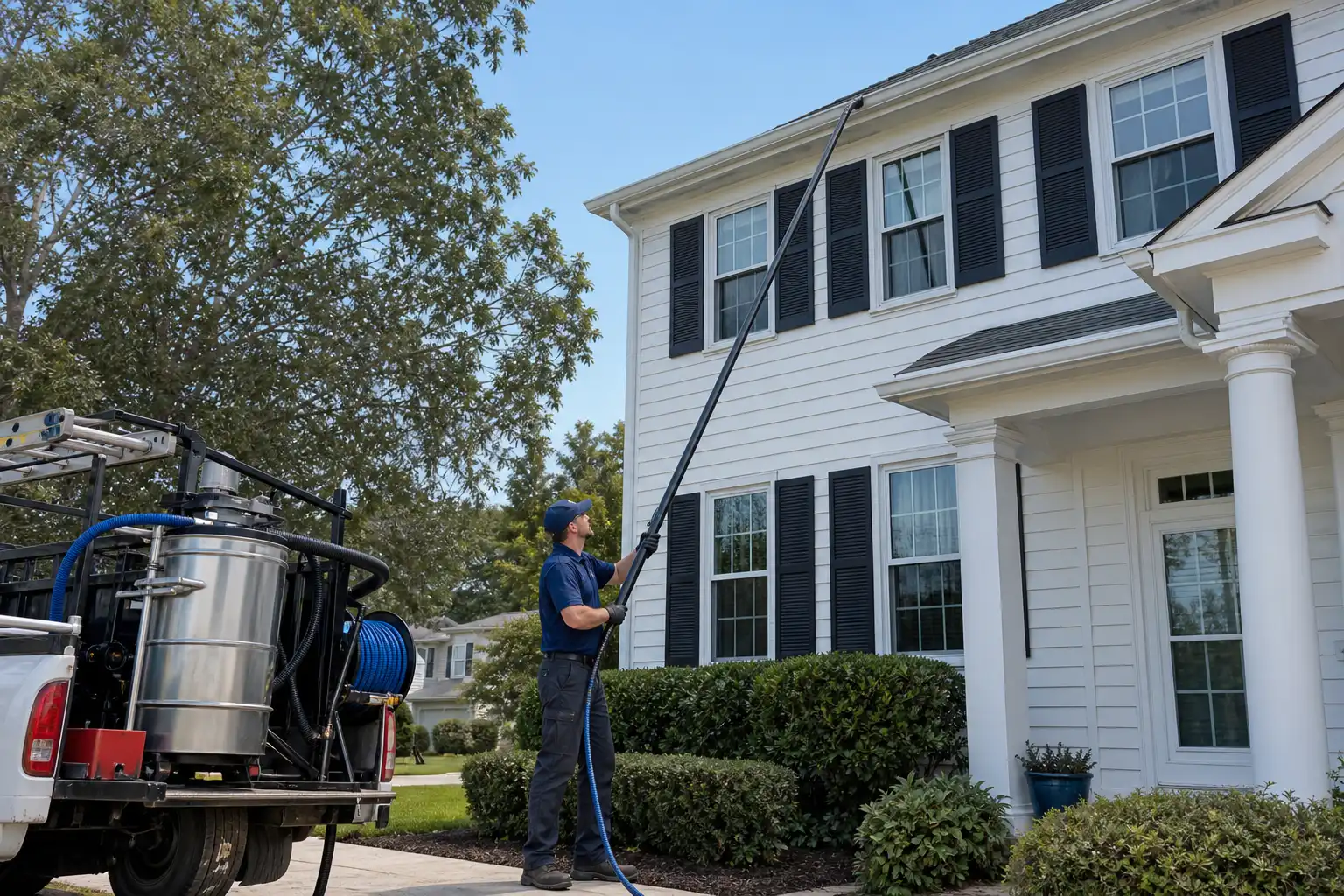
Professional crews typically use high-powered vacuum systems with carbon fiber poles that extend 40 feet or more, soft-wash low-pressure rigs, and water-fed poles with curved gutter nozzles. These tools let technicians work safely from the ground on two-story homes while containing debris in sealed collection units. Consumer-grade tools don’t match this reach, containment, or safety profile.
Can I clean gutters from the ground without a ladder?
Yes, for single-story homes. Telescoping wand attachments for wet/dry vacuums or leaf blowers can reach gutter channels from ground level, though visibility and precision are limited compared to working from a ladder. For two-story homes, ground-level consumer tools rarely provide enough reach or cleaning power to do the job thoroughly.
Professional vacuum systems are designed specifically for safe, effective ground-level operation on taller homes.
Does my gutter material affect which cleaning method I should use?
Absolutely. Aluminum gutters can handle gentle hand removal and low-pressure flushing but are vulnerable to denting and hanger loosening under high-pressure water. Copper and zinc gutters have soldered joints and natural patinas that both get damaged by pressure washing. Always match your cleaning method to your gutter material. If you’re unsure what material your gutters are, a professional inspection during a cleaning visit will confirm it and recommend the safest approach going forward.
How do I know if my gutters were damaged by previous cleaning methods?
Look for these signs: sagging sections that weren’t sagging before, visible gaps at gutter seams or mitered corners, water running behind the gutter channel during rain, rust streaks appearing on aluminum surfaces, or gutters pulling away from the fascia board. Any of these symptoms after a cleaning suggest hanger or sealant damage. A gutter repair assessment can identify the cause and prevent further deterioration before it reaches the fascia or foundation.
 Ready for a free quote? Share a few details with Urban Seamless Gutters, we’ll help you choose the right next step. Get a Free Quote |